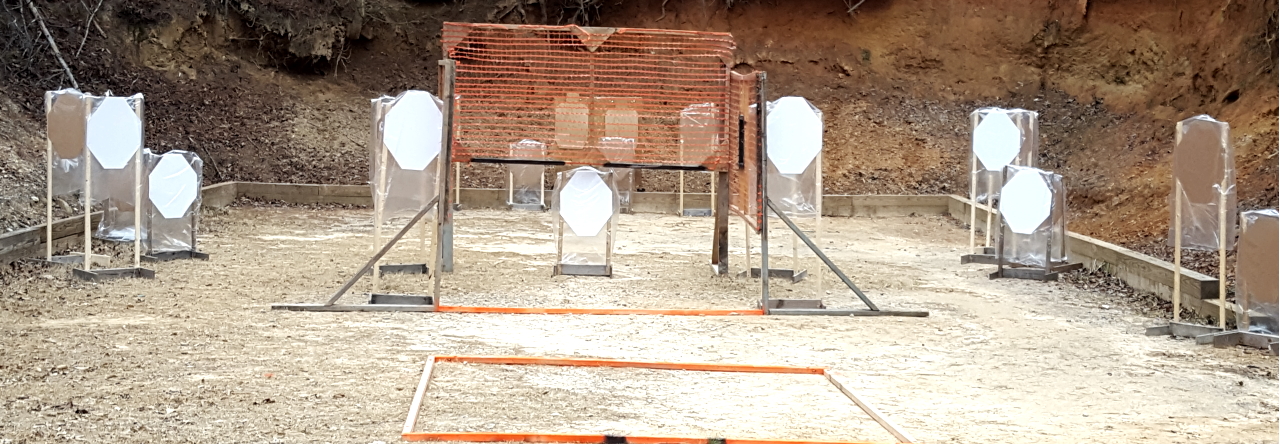
Photo by P. Erhardt, courtesy of USPSA
Last time I talked about how to practice for GSSF competition. Today I’m covering how to practice for a USPSA match.
There are some differences between GSSF and USPSA that add to what we need to practice. However, everything we did to get ready for GSSF will apply to USPSA. Here are the extra things we need to practice, in what I see as the order of their importance to our success in the sport:
* In USPSA the shooter reloads when the ammo runs out, or as the course of fire dictates. In GSSF there are no reloads.
* In USPSA the shooter moves between targets. In GSSF the shooter is stationary.
* In USPSA the shooter starts each stage from a draw, or with the gun on a table or other surface. GSSF starts from low ready
* In USPSA each stage is different. GSSF uses the same three stages for just about all matches.
RELOADS
To me, one of the biggest things I can do for USPSA matches is practice reloads until they are smooth and almost reflexive. The difference between a good reload and a bad reload can be a few seconds. A terrible reload – dropping the magazine, for instance – can add not just time, but can also be a big demoralizer.
So, with an unloaded gun and unloaded magazines, put one magazine in your gun, and the rest in the mag pouches on your gun belt. Then, practice reloads. From a shooting position, first bring the gun up to eye level, and in a little. Drop the mag from the gun, and at the same time, grab a mag from your belt and bring it up to the gun, and insert it smoothly.
Repeat these as many times as you need until you are comfortable. I find that 10 or 15 minutes is about right for me.
Variation: start with the slide locked back to simulate an empty gun reload, and at the end of the reload, drop the slide. For me, the best way I have found is to start the gun back to the shooting position, grab the top of the slide with my off hand, and push with the gun hand while pushing the slide back with the off hand. Yes, there are other ways, and I leave it to the reader to find the way that works best for you. I admit, I’ve changed the way I release a locked slide several times in my life, so I can’t tell you any one way is best.
One piece of advice – make sure your gun is in great working order before you go to a match. In one USPSA match I watched a Master class shooter spend several stages watching the magazine drop out of his 1911 every time he fired a shot. It turns out he had changed the magazine catch spring in his gun the night before, trying to fine tune his gun. He had even practiced reloads, and was confident it would work. But, he didn’t factor in the shock of recoil. He finally had to curl his off hand under the grip just to complete the match.
MOVING BETWEEN TARGETS
Sorry, but the best way to practice this by doing wind sprints, almost like in football practice. Good general physical condition is the best way to be prepared for moving, and I don’t pretend to be any expert here. I generally limber up (remember Rule 3 from Zombieland) and then spend ten or fifteen minutes dashing around the back yard. I usually do this without my gun, but I think the neighbors wouldn’t mind either way.
Be sure to practice starts and stops, and work on controlling your breathing during the stops so you don’t upset your target picture.
DRAWING
Don’t over-do the drawing practice. After all, we only draw once in each stage. It’s like golfers I know who spend their whole practice session hitting drivers, when they are only going to use the driver 14 times in a round of golf, versus maybe 40 or 50 putts. So, still put your time in practice starting from low ready, as we did practicing for GSSF. That’s because every time you move from one target to another with your gun lowered, your next shot is from low ready. This is going to happen a lot more in every stage.
To practice drawing, start with an unloaded gun, and start slow and smooth. Bring the gun up into your sight, then push toward the target,as we did when starting from low ready, so you avoid the oscillation when the sights are on target. Work up to full speed over 2 or 3 minutes, then draw for 3 to 5 minutes more.
PUT IT TOGETHER
Now, use your imagination. This can be done inside or outside. First, use some painters tape to tape some of the 1/3 size USPSA targets from GlockFAQ to walls or trees. (Or, since it works for Navy SEALs, use 3×5 index cards.) Then, start with the gun in your holster with an empty magazine, and run a stage. Go from target to target, counting shots, and changing magazines as you go. Be sure to keep your muzzle down range and your finger off the trigger as you move. When your stage is through, unload and show clear, reholster, then pick up your mags, and do it again.
I would love to hear your USPSA practice regimen!