Level Up

My Quest for C Class

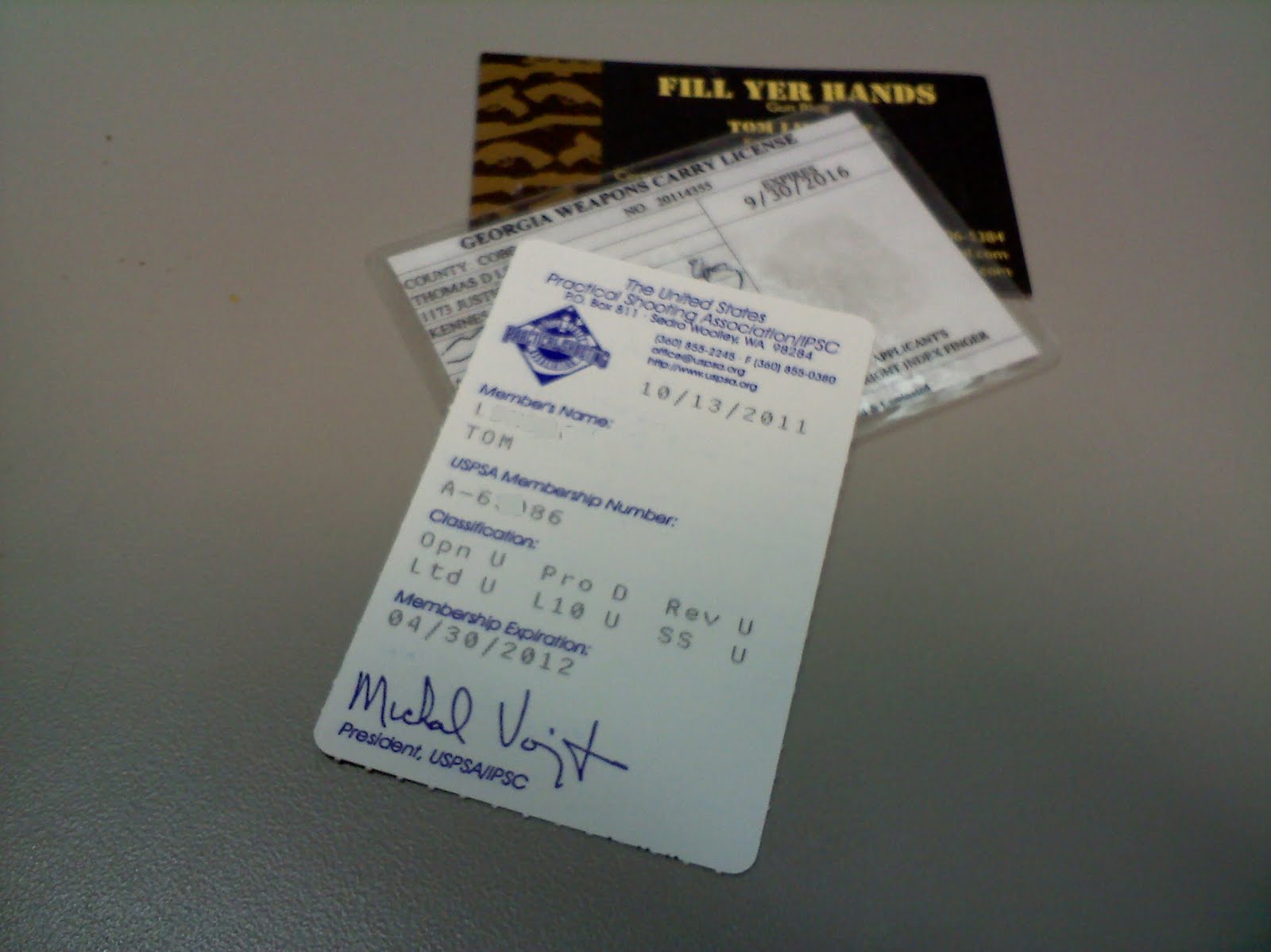
I feel like I should be standing under a floating gold heart or something.

I got a new membership card in the mail yesterday from the USPSA. It turns out that I’ve shot enough matches with classifier stages that I have been classified. No longer do I need to put a “U” in the Class column when I sign in. And, I will now be competing against all others in my class.

My class? D Class in Production. It’s what I expected. It means I’ve averaged under 40% in all my classifier stages so far.

How do I get to C Class? Practice.

I have to score 40% to 59.9% on the next 6 of 8 classifiers that I shoot. How long will that take? I don’t know. Stay tuned.

If You Missed Out . . .

. . . on getting a gun from the ATF, you can still get the T shirt.

I may be the last one to mention it in their blog, but my friend and training buddy Sean Sorrentino did what a lot of people just thought about, and made up some T shirts that ask the pressing question, “Am I the only person on the planet that didn’t get guns from the ATF?”

Shirts start at $16 plus shipping. An ample fellow like myself, who wants to leave room so I can put it in the dryer, will pay more.

He even has pink shirts. Perfect for those who wear that color.

In Memoriam

Photo courtesy of the USAMU via the Military Marksmanship Association.

I was clicking around today looking for information on the US Army Marksmanship Unit (USAMU), when I came across the website for the Military Marksmanship Association, a private, non-profit group made up of former USAMU members. I was surprised to find there on the first page a familiar name, SFC Jason Sargent.

The last time I shot a GSSF match at Fort Benning in 2008, the USAMU served as Range Officers. Sergeant Sargent was the RO when I shot 5 to Glock. How could I forget that name?

I was also shooting with another shooter, for whom it was actually the first time they had shot a pistol. I was fascinated with how patient the other RO was with this new shooter, even though her strings took minutes to complete.

While we waited, SFC Sargent asked me, “Would you mind if I gave you a pointer?”

Well, duh. When the US Army Marksmanship Unit offers you free advice, you take it.

It turns out I was slapping the trigger, that is, removing my trigger finger from the trigger after every shot. He showed me how to shoot with reset, that it, to hold the trigger until the gun cycled, then release it just enough to reset the trigger, ready to fire. The difference was palpable, and I was able to reduce the time on my next string of fire by over 3 seconds.

It was probably the most valuable shooting advice I’ve every gotten, and I remember it vividly. After all, like I said, you don’t forget someone named Sergeant Sargent.

But today, on the front page, was a link to SFC Sargent’s obituary. I was stunned.

** Update – obituary here.

I will let you read his story. I certainly cannot do it justice.

SFC Sargent, thank you for your service, and for your advice. You will be remembered.
Podcast of the Week: Gunsmithing Radio

As I’ve spoken of many times, I like to fiddle around with my guns. I’m a certified Glock Armorer, and I own books on the SKS and Mossberg 500. But, I’m not a gunsmith by any stretch of the imagination.

That doesn’t stop me from becoming a really big fan of Fred Zeglin and his new podcast, Gunsmithing Radio.

This is a fairly new podcast, with 4 episodes so far. There doesn’t seem to be any set schedule. In fact, I just happened to notice a new episode on my iPod this morning.

In the first episode, Fred explains that Mark Vanderberg, the founder of Gun Rights Radio Network, approached him to start a podcast about gunsmithing. Fred has been a gunsmith for about 30 years, and he agreed. I’m glad he did.

Episode 1 begins with an explanation of gunsmithing and how Fred got into the craft. Episode 2 explains how to become a gunsmith.

Episode 3 gets a bet more technical, by explaining the tools a gunsmith uses, and a little about how they figure into the business side of being a gunsmith.

I was just fine with my level of tinkering, to this point.

Then Episode 4 moves into how to do specific things with a specific rifle, namely modifying the trigger guard of the venerable Mauser bolt-action rifle. I listened, but I have to admit didn’t get all of it. For one thing, most of what he talked about was beyond my skill level, and second, I haven’t even shot a Mauser before, let alone disassembled one.

But all that aside, I’m a fan, for a number of reasons.

The first is the host. Fred’s style and tone is wonderful, at once conversational and professional. You can tell he’s had a lot of experience teaching his craft, which is a good thing, since gunsmithing is danger of becoming a dying field.

Second is that, even though I didn’t understand it all, this is what I call a “timeless” podcast, one I can keep, and listen to any time, from now on. It’s not so immediate that it loses its relevance in a week. Mausers will always be Mausers. Or not – that’s the beauty of gunsmithing.

I discovered one thing, though, that may help me in the future. I subscribe to most of my podcasts through iTunes, and I rarely visit the individual podcast websites. When I was researching this post, I visited the podcast website, and I found pictures of the Mauser, and all the modifications Fred talked about in Episode 4. So, next time, I’ll pay attention when Episode 5 shows up on my iPod, and I’ll be sure to visit the website.

So, Gunsmithing Radio has taken a welcome place on my podcast rotation.