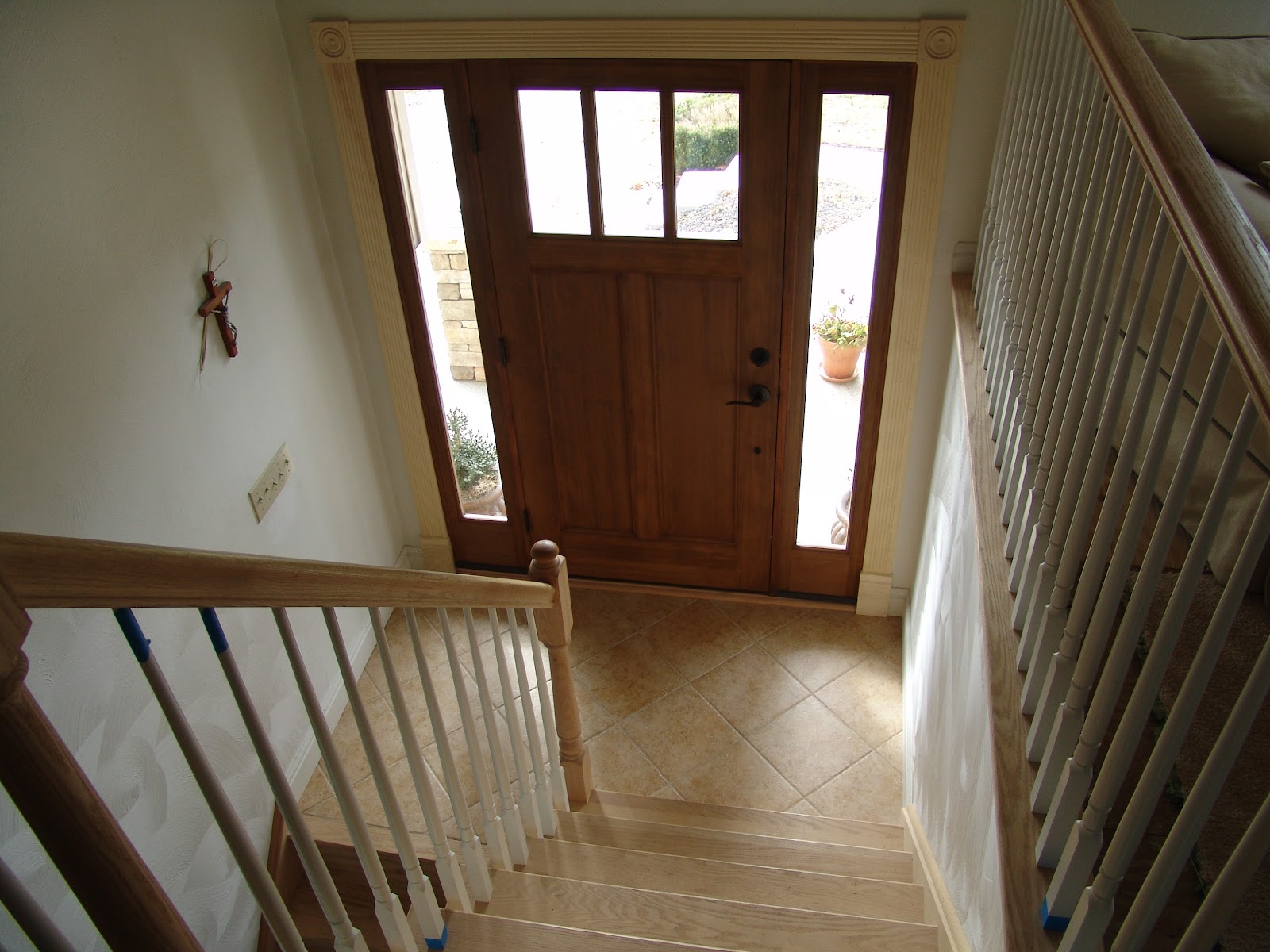
Dealing With The Front Door – The Family Discussion

At dinner last night my wife and son and I had a serious talk about the recent shooting incident in Lake County, Florida, and how we would handle anyone coming to the door after dark.

This was a good refresher for my son, who is 15. I remember being 15, and my attention span then was even worse than it is now. But he agreed that he wouldn’t open the door for anyone he didn’t know. He also agreed that he would call 911 if there were police at the door. He’s heard enough about home invasions, I guess.

We talked about the scenarios and how to deal with them. I guess I should not be surprised but we were all in agreement.

My favorite reply from my son was when we discussed what to do if the 911 dispatcher told him they had no record of police coming to our house.

“I’ll just tell them to go ahead and send some real police, and after they deal with these losers, I’ll be in the back bedroom. Behind the bed. With a friend from Austria.”

Be Prepared, Part 10 – Dealing With The Front Door

“It’s just a bizarre set of circumstances. The bottom line is, you point a gun at a deputy sheriff or police office, you’re going to get shot.”
– Lt. John Herrell, Lake County FL Sheriff’s Department

At 1:30 AM on July 16, 26-year-old Andrew Lee Scott did what a lot of people might do. When there was a loud banging on the front door of his apartment in Lake County, Florida, he grabbed a pistol and answered the door.
Deputies were looking for an attempted murder suspect, and found his motorcycle parked in front of Scott’s apartment. So, they knocked on his door without announcing they were police.
Robb Allen at Sharp As A Marble probably said it best when he referred to “lethal levels of Fail.” There were so many mistakes made on both sides of this that the lessons should be self-evident. But I wanted to go through them, and talk about how I addressed this with my family last night, so that you might be prepared.
HAVE A PLAN
Everyone in your household needs to know the plan, and needs to follow it. You have fire drills at your house – you need to practice this, too.
Only the eldest person home answers the front door after dark. If my kids are home alone, they don’t answer the door. Period. If they are seen and called to by someone outside, they can deal with them at that point. But they don’t open the door to someone they don’t know.
FOLLOW THE PLAN
If someone knocks on my door late at night, we don’t open the door. It’s that simple.
I will go to the door with a pistol either holstered or concealed behind my back, and with a phone. We first find out who it is, by turning on the front porch light, and looking out the front window at the porch. (If your house isn’t set up that way, you need to have some way to see those people.)
If they are people we know, and they don’t sound under duress, and there are no others with them that we don’t know, only then would we open the door, and deal with the situation.
If they are people we know, but they sound under duress, we find out why and assess the situation from there. If they have trouble and need my help, I would decide which way to go.
If they are not someone I know, I will call 911 and tell them help is on the way, but I’m not opening the door. Not if it’s raining, or winter, or the baby is sick. It sounds cruel, but I would rather that, than for you to read about me the next day, killing by home invaders.
IF IT’S THE POLICE
If they claim to be the police, I would tell them I am calling 911, and do so. I would tell the dispatcher that the police are here, and ask why. If they have legitimate reason to be there, I would put my pistol away, and open the door, and follow their instructions.
It is vital that at no time would I show a gun or other weapon to someone at the door. First, if they are police, they will shoot me.  If they aren’t police, they could call 911 themselves and report me for assault. Yes, I could present a positive defense under Georgia’s Castle Law, but that would still involve being arrested, hiring a lawyer, and lots of money.
WORST CASE
Of course, if someone forces their way through my door, I will have a split second decision to make. If they are police, I need to follow their instructions completely if I want to live through this. For me, this is vital. I have quite a smartass disposition, and a more than a little bit of a Don’t Tread On Me attitude. The key here, though, in every situation, is to de-escalate, so that, hopefully, no one has to get hurt. And certainly, things turn out better for us than they did in Lake County.

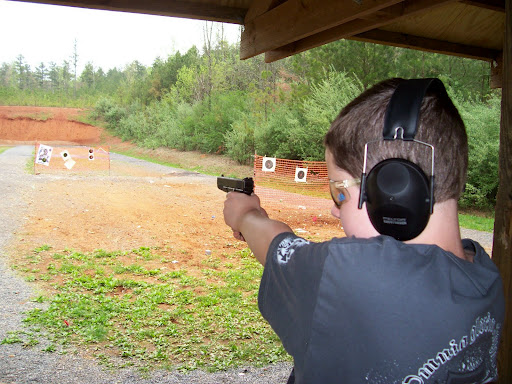
The Safety Rules in Depth – Part 3

Rule 2: Never let the muzzle cover anything which you are not willing to destroy.

If there was a single gun rule that, when violated, resulted in the most damage, injury, and death, it would have to be Rule 2.

After all, the direction a gun is pointed determines where the bullet goes when the gun fires. While Rules 1 and 3 are devoted to preventing the gun from going off unintentionally, with Rule 2, it doesn’t matter whether the gun is fired intentionally or unintentionally (or, as the anti-gun crowd believe, it goes off by itself). This Rule must be followed, or bad things happen.

Rule 1 is a philosophical rule. It takes a change in the shooter’s thinking to make it work. You need to have a change in your attitude, so that you always treat the gun as if it were always loaded, even if it isn’t. Which it is – see Rule 1.

Rule 2 is a concrete rule. It doesn’t matter how you think about the Rule, what your attitude is. The gun is pointing where the gun is pointing, regardless of how you think about it.

In my experience, Rule 2 is the most violated of all the safety rules. The main reason for this is ignorance and inexperience. New shooters may be used to playing with a toy gun, or not having a gun around at all.

And then there are the thousands of very bad examples on TV and in movies.

Wow. Not only did Vincent violate Rule 2, he violated Rule 3. Bad things happened. Sorry, Marvin.

Almost as bad are the hundreds of images where an actor points the gun in the air as they move around. No one tells viewers that this isn’t for good safety practice, this is so the gun is in the shot with the actor’s face.

This Rule takes concentration. Nothing about Rule 2 can be left to attitude or thinking or philosophy. You must be aware where your gun is pointed at all times, or bad things can happen.

So, what works when teaching Rule 2? Zealous enforcement and repetition. When you find someone waving a gun around, call them on it. Whether you are polite about it or not depends on the situation and the violator, I suppose, but you should be firm and unequivocal in any case. In my family, we are all allowed to call “MUZZLE!” and push the gun downrange or toward the ground if it’s safe to do so.

A search of most gun forums will also find many accounts of violation of this rule at gun ranges, gun shows, and gun stores. When a polite but firm reminder not to point the gun at something they aren’t willing to destroy goes unheeded, the only recourse then is to leave. I know I’ve done it.

+++

Rule 2 is the failsafe of the gun rules. Follow it – make sure the gun isn’t pointed at anything you aren’t willing to destroy – and even if someone violates the other rules, you will be safe.

The Safety Rules In Depth – Part 2

Rule 1 – All guns are always loaded.

This rule has probably generated the most dissension among gun owners than anything else, including the “9mm versus .45ACP” debate. Some don’t even include it as a rule, arguing that, if the other rules are followed, it becomes moot.

However, it can be argued that unloaded guns cause more “accidental” shootings than anything else in the shooting world. Of course, what really happened is that guns that were assumed to be unloaded did what loaded guns are designed to do when the trigger is pulled. And, since no care was taken about which direction the gun was pointed, the result, many times, is tragic.

A loaded gun is a deadly weapon. To treat it as anything else is negligent and foolish.

But the argument is made that not all guns are loaded. Examples would include guns at a “cold” range, such as at a competition. In this case, guns are only loaded once the competitor is on the firing line, and then only at the direction of the Range Officer or Safety Officer.

The point of this rule, though, is to prevent the negligent discharge of a gun that was assumed to be unloaded, but really wasn’t. As with many things, Lt. Colonel Jeff Cooper said it best in his final version of Rule 1:

All guns are always loaded. Even if they are not, treat them as if they are.

If we treat all guns as if they are loaded, then we won’t point them at anything we don’t want to destroy, and we won’t put our fingers on the trigger until we are ready to shoot.

It’s a mindset that we have to develop, that is part of the overall safety mindset – that our gun is a powerful tool, which we must control and direct at all times.

++++

Certainly one of the scariest and most frustrating experiences is to be around someone who has no concept of gun safety, and insists on waving it around or putting their fingers on the trigger. I have no qualms about asking someone politely to treat the gun as if it were loaded, and please stop that. It is usually at a gun show or gun store. If they get upset about my request, I take myself and my business elsewhere.

Of course, at a range or in my home is another issue. I try to be as nice as I can, but nothing pulls the barium rods out of my nuclear asshole reactor quicker.

++++

Once, when my son was perhaps 8 or 9 years old, we were getting the BB guns out for a shooting session. We put on our safety glasses, and I took down the trusty Red Ryder Range Model Lever Action Carbine (without a compass in the stock, or this thing that tells time), and I tilted it back and forth to make sure there were no BBs in the action.

I handed it to my son, and asked, “Is that loaded?”

“No.”

Wrong answer. The guns went back up, to be brought out another day.

He’s never forgotten that lesson. And he knows every gun is loaded, even if there might not be any ammunition in it.