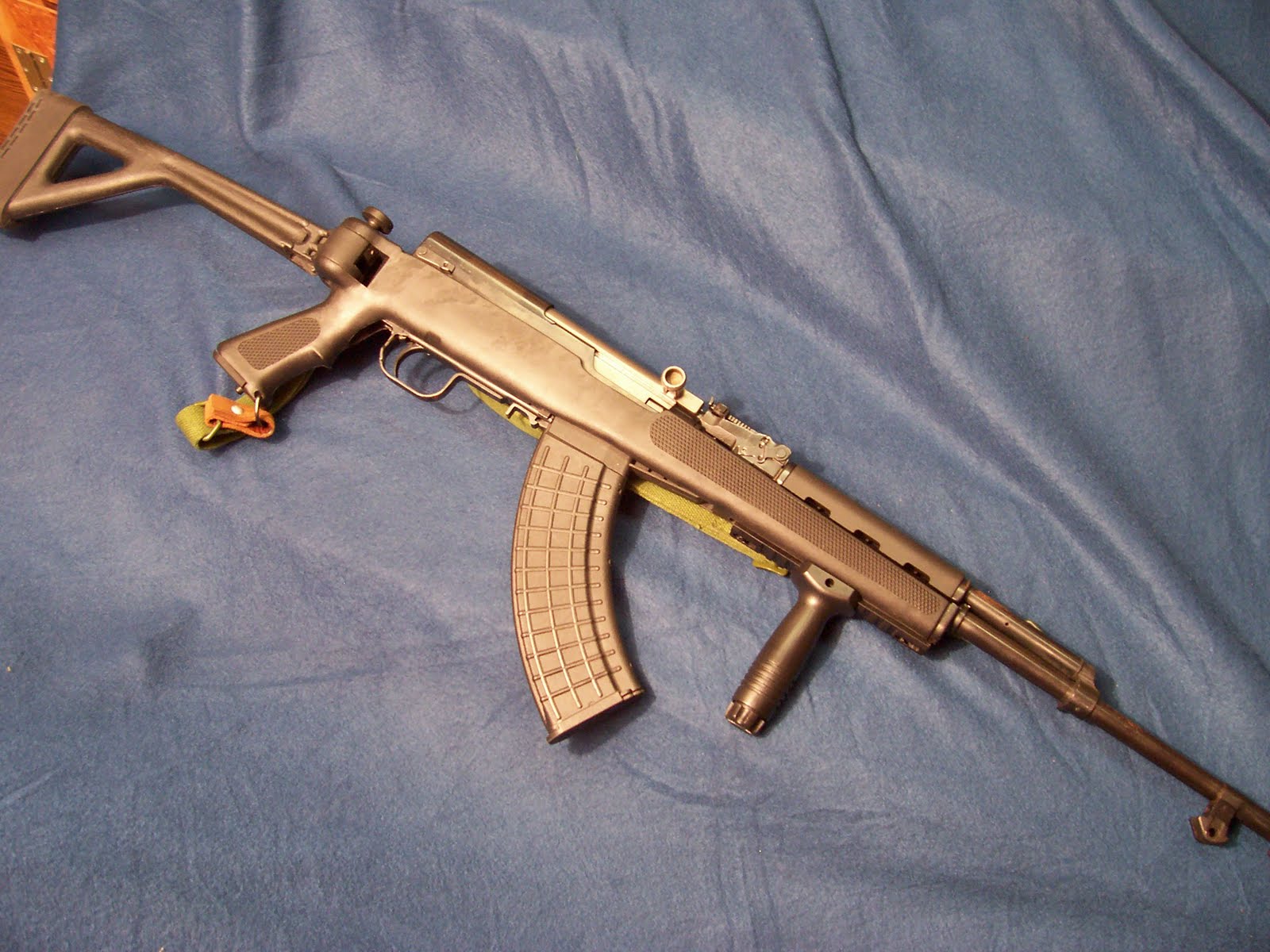
NERD ALERT: As my mother was fond saying, “Many people are not engineers.” As I read through this post before publishing, I realized it is a topic that may not be attractive to anyone who doesn’t have at least a small nerdy streak. If at any time you feel your eyeballs glazing, please scroll down and look at the gun porn a while. Then you can skip to the Results. I won’t mind, honest.
Like most of you, I have several gun projects in the works. And, like most of you, I have limited resources to complete those projects, both time and money. I sat down to rank my three most emotionally attractive projects by how much I wanted to do them, and they came out this way: build an AR-15; pimp out my Ruger 10/22; and finish re-finishing my shotgun.
But, my engineer mind took over, and I wondered what would happen to that order if I used my engineering project management skills to decide priorities.
Projects can be prioritized using a number of criteria. After some thought a research, the ones I used were
Results: Will the project get me where I want to be? How sure am I that I can achieve the project like I want to?
Utility: How much will I use the finished project? How much will it affect my shooting, both accuracy and frequency?
Effort: How hard will it be to complete, and how long will it take?
Cost: How much will it cost, and where will the money come from. Include Cash Flow and Return on Investment (ROI) if applicable.
I ranked each criterion 0 through 5. For Results and Utility, 5 is high, and for Cost and Effort, 5 is low. I then added them up, to rank the projects.
Here’s what I found.
AR-15 Build
I want an entry level AR-15 I can use for 3-gun and home defense. I was set to buy one, then I borrowed a friend’s AR to take on a shooting trip, the same time EyesNeverClosed was live tweeting a lower receiver build. I’m convinced now that I can do all the work needed to assemble this gun, so I’m going to build my own.
Results: 4. This will be a new gun, so it will certainly get more use than the one I don’t have now. Granted it’s an entry level, but I’m not going to use it in the sandbox or the USPSA Multi-Gun Nationals, so I can live with that.
Utility: 4. I expect I will shoot this gun as much as any other, in 3-gun and other competition.
Effort: 3. I’m not sure what skills I’m going to have to develop, but as a Glock Armorer I have confidence I can do it.
Cost: 2. This one is the most expensive. I’m budgeting $750, and I’m having to save up as I go. I have a side project that I’m dedicating the proceeds to, so it doesn’t come out of normal cash flow, until I run out of that money, any way.
Final Score: 13
Super 10/22 Build
Right now my Ruger 10/22 looks more like Steve Rogers, but I want to turn it into Captain America. This means a new bull barrel and stock, plus more Duracoat. Optics are optional.
Results: 2. Yes, it will look really cool, and it may be a lot more accurate, but it’s not a big leap over my stock 10/22.
Utility: 2. I probably won’t shoot it any more than I do now.
Effort: 4. This is fairly simple once I get the parts. Hey, it’s a 10/22!
Cost: 3. $250, cash flowed.
Final Score: 11
Shotgun Refinish
Some time ago I got a wild hair and decided to refinish Lee, my Mossberg 500 shotgun. So far I’ve got the bluing stripped off, and I admit, I’ve put off completing the project for some time. To finish, all I need to do is apply some flat black Duracoat and add a new black polymer stock.
Results: 5. This will get me a shotgun that I can use the rest of my life.
Utility: 3. I will mostly use this for trap and home defense, until I get into 3-gun.
Effort: 4. Fairly easy, can be done in one day. Maybe even easier than that, but I’ve never used Duracoat before.
Cost: 4. $100, and I can do this out of normal cash flow.
Final Score: 16
RESULTS
Come here if the discussion made you dizzy.
Finishing my Mossberg came out on top, which was a small surprise, since I really wanted to build the AR first. But, I trust the process.
The AR and the 10/22 come out very close to each other, and if I didn’t already have a 10/22 I could shoot, it would probably have gotten a higher Results score, and it would be first.
So now I set some goal dates, based on cash flow, what else. I plan to have the shotgun done by July 4th. I set a goal date of November 8 for the AR build, and a tentative date of the end of the year for the 10/22, depending on cash flow after that.
Does this approach get me anything over my gut feelings? Yes. This process has forced me to really evaluate these projects, and spell them out. As a result, I will have my shotgun back sooner than if I had waited.
I also have a new framework to use when I consider new projects.
I’ll be sure to report on these projects as I go.



 Fill Yer Hands