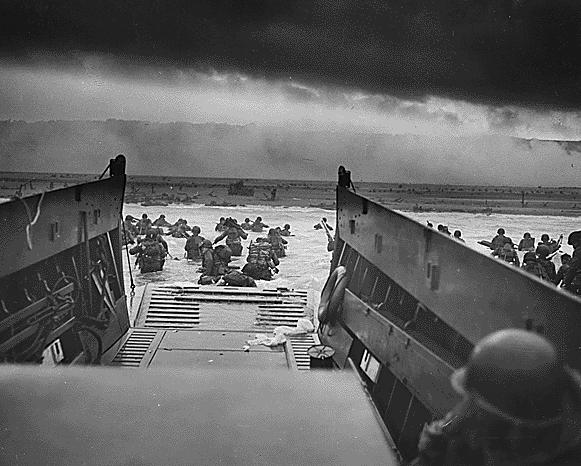
First they came for the communists, and I didn’t speak out because I wasn’t a communist. Then they came for the trade unionists, and I didn’t speak out because I wasn’t a trade unionist. Then they came for the Jews, and I didn’t speak out because I wasn’t a Jew. Then they came for me and there was no one left to speak out for me.
– Martin Niemöller, German pastor and theologian, 1946
Some of us have learned the lesson, and are speaking out.
If you are worried about government intrusion into the affairs of religious groups, especially the Catholic Church, you should check out his post.
The lesson – if we don’t speak out against injustice at any level, against any group, then we shouldn’t expect anyone to speak out against injustice done to us. You can pick your own example.
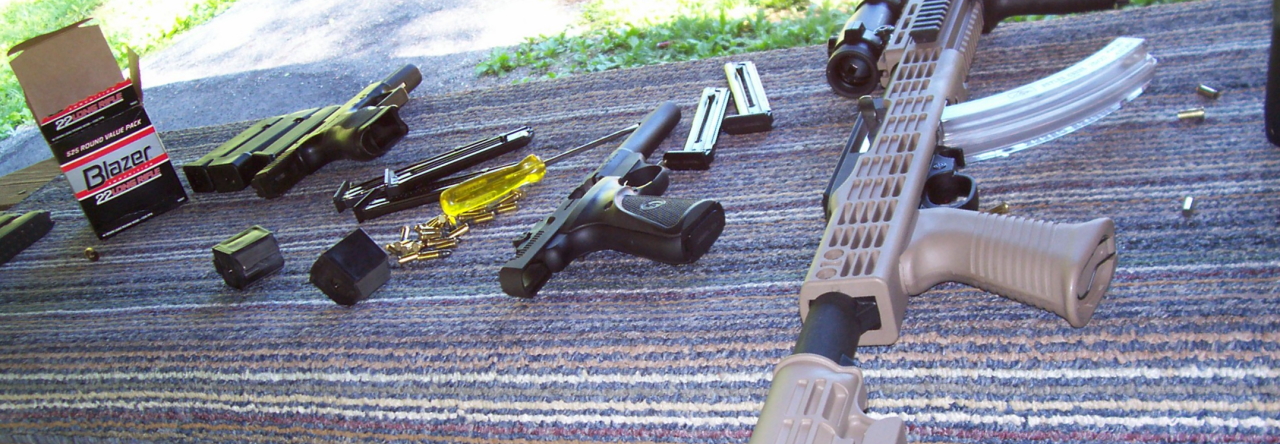
I get asked that often, and most times I politely explain that I do so to protect myself and my family.
We live in a Southern town, where the idea of gun ownership is never questioned, except perhaps in the negative, as in “What do you mean, you don’t own a gun?” In fact, as you probably know, city ordinances in Kennesaw where I live require every home to have a gun. When I moved in the neighborhood ten years ago, the second or third question, behind where did I grow up and where do I go to church, was what kind of guns do I own. We then compared the guns we were carrying. It was nice.
But at dinner a few weeks ago with some fellow bloggers, Sean Sorrentino, whose profile as a gun blogger exposes him to that question many times more often that I, quoted Tam* and gave a more tacit explanation:
Because F**K YOU, that’s why.
Thanks to the Second Amendment, we don’t have to give anyone a reason why we own guns. I give one to people who ask nicely, because I want to be a good ambassador of gun ownership.
There are those, however, who oppose guns, gun ownership, gun portrayal, gun media, gun owners. And, as Jay G said in an expansion of this thought on his site:
For those whose minds are slammed shut like a steel trap, “BECAUSE F**K YOU THAT’S WHY” works just fine…
Sad that we have to answer that way, but they don’t seem to understand any other reason.
In the course of seeing how bad the video quality was from the Memorial Day Steel Match, compared to the HD video I shot earlier, I edited my Match Checklist this morning to add my HD camera. I use this checklist to remind me of what I need to do, and I typically start it a few days before the match.
I thought I would share it with you. Here’s the checklist. Feel free to copy it for your own use.
As I’ve related before, on Memorial Day the Creekside Firing Range in Cartersville, Georgia, hosts an annual Memorial Day Fundraiser. Consisting of a pistol match, and auction, and a tactical rifle match, all proceeds from the match this year went to the widow and two children of a soldier from the Chattanooga, Tennessee area, who was killed in Afghanistan this past year.
I shot in the morning Steel Challenge match, which attracted about 40 competitors. I didn’t stay around this year for the auction or the rifle match, mostly because I don’t own an AR-15 – yet. (More on this later.)
The shooters were split into two sqauds, and we shot 5 stages.
STAGE 1
Stage 1 was simple enough. The shooter started out seated at a table, with the gun loaded and lying on the table facing downrange. At the buzzer, we engaged five 4-inch targets at 20 yards, then moved to the second shooting area, where we engaged another five 4-inch targets at 20 yards.
Sounds simple, yes. Easy, no.
Four inch targets are small, very small at 20 yards. That’s the X ring on a NRA D1 target, or half the center “-0” ring on the IDPA target.
Couple that with being the first stage of the day, and it wasn’t pretty. I shot it in 32 seconds, and I was in the upper half of results if I had to guess. I bet I took 25 rounds.
STAGE 2
Stage 2 was just Stage 1, reversed. Start standing, shoot with the opposite hand, and progress to the seated position.
Okay, I had practiced drawing with my right hand and moving the gun to the left hand, and I had done some dry firing left handed, but not enough. As I tweeted at the time, I found out that, shooting left handed, I flinch in a way totally different from how I flinch right handed.
All stages carried a 90 second par time, and I ran out of time on this one, with only 4 targets knocked down. Since each target missed added 10 seconds, my score was 140 seconds. Yuck.
The best way I can describe my performance on this stage is to compare it with a drunk Kid Shelleen in the movie Cat Ballou. Only, I wasn’t drunk.
STAGE 3
Stage 3, for me, was a lot easier. From left to right there were two full size pepper poppers, then five groups of two smaller poppers, set in front of each other. The shooters were allowed to move along a fault line, set 20 yards from the targets, that ran the length of the targets. Some shooters moved along the line, Sundance style, while I prefered to stand and deliver.
I shot the stage in under 20 seconds, using fifteen shots. Now we’re talking.
One observation was that I was actually able to call my shots on this stage. Rather than wait until I saw the target fall, I knew when I broke the shot that my sights were aligned, so I trusted that the shot was made. I even knew when I had made the three misses.
STAGE 4
Stage 4 is shown above, from a little left of the shooting area. It consisted of two Texas Stars and a popper. One plate on each Star was painted yellow, and the rules specified that these two plates had to be shot first, or there was a 10 second penalty. The problem was, the yellow plate on the back Star was in line with one of the plates on the front Star, so that you had to hit the yellow plate on the front Star first, and when the front Star started spinning, you had a shot at the back Star’s yellow plate.
Once the two yellow plates were down, you could then engage any plates you wanted, in any order. Of course, with a Texas Star, that’s is about a hundred times easier said than done.
I managed to clean the stage in under 70 seconds, although I did knock off a non-yellow plate from the front Star before I hit the yellow plate on the back Star, so I incurred a ten second penalty.
STAGE5
Stage 5 was a mix of twelve targets, 4 inch plates and poppers, all at about 15 yards. I kept things simple and engaged them left to right. Shot it clean, with a decent time, again calling my shots. On this one, I asked a fellow competitor to take some video.
Sorry for the crappy video quality, I left the HD camera at home. I’ve got to add that one to my checklist.
In all, I enjoyed the match, even if I didn’t shoot as well as I could on the first two stages. I like shooting steel matches because the feedback is definite, and the scoring is simple.
As soon as I know where I placed I will let you know.