From Steve Rogers to Captain America

A few years back, I won $200 in a sales contest right before Christmas, and I used it to buy a bare bones 10/22 on Christmas Eve. At the time, I named the gun Paul after my boss. Earlier this year, I bought a Browning Buck Mark .22LR pistol that I named Bucky, and it just made sense to start calling the 10/22 Captain America.

The problem was, Captain America wasn’t special. It was still bare bones. Yes, it was fun to shoot, and I had proved that about 2,000 times. But it wasn’t an Avenger by any stretch.

In fact, it was more like 90 pound Steve Rogers.

So, I decided to start my own Super Soldier program*.
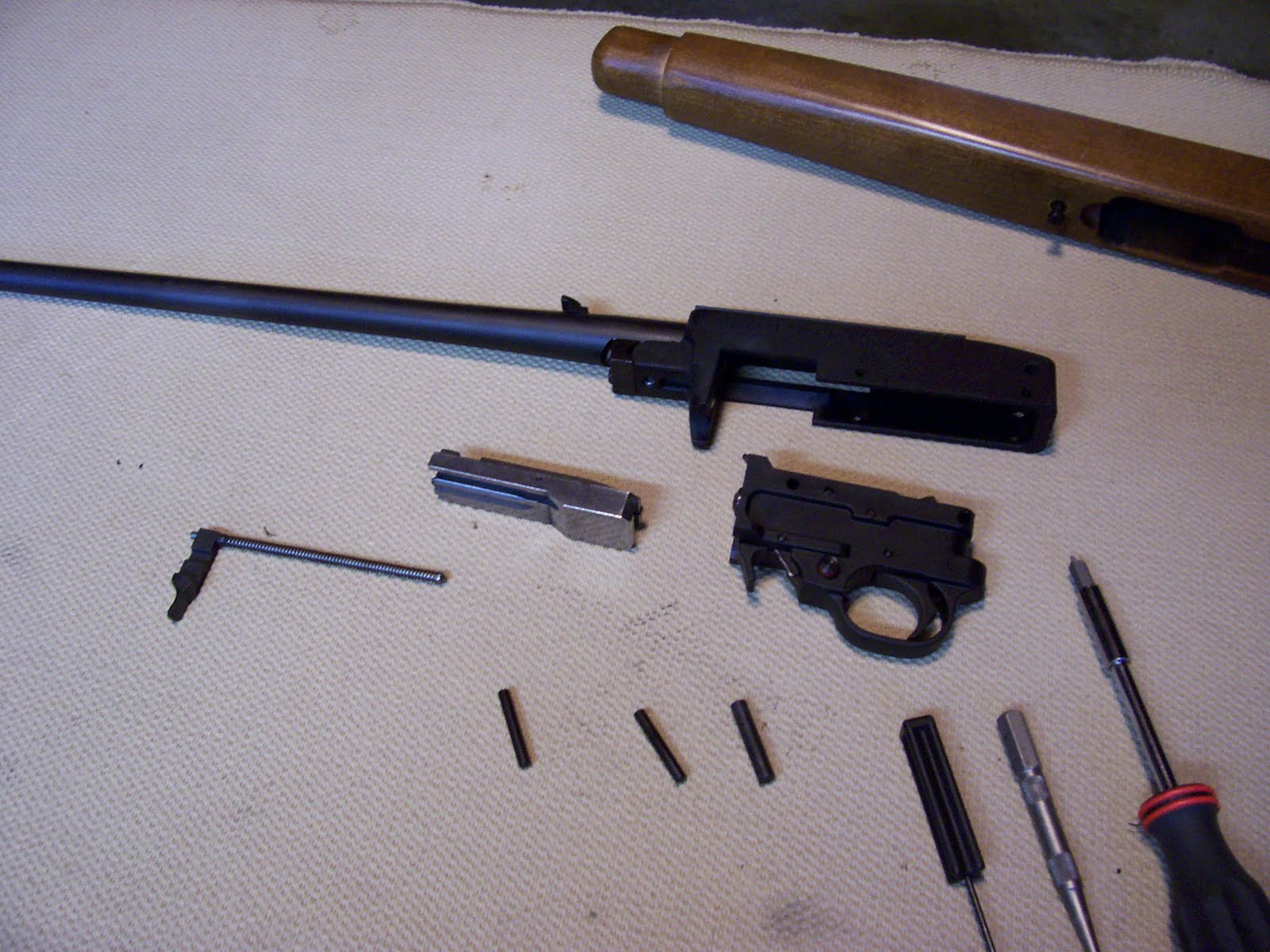
I started by disassembling the 10/22. This can be done with a screwdriver and a punch. In fact, my Glock Armorer tool just worked just fine. For my modifications, I needed the receiver, the trigger group, the bolt assembly, and the bolt handle, guide rod, and recoil spring assembly.

Actually, this photo is a little deceiving, as it shows the parts after about 20 minutes of cleaning. I had shot about 2,300 rounds through the gun without cleaning the bolt or the receiver. The bolt assembly was completely black.

For my first modification I swapped out the factory extractor with a Power Custom Sharp Claw Titanium Extractor. The factory extractor is a stamped metal piece, and I could see the Power Custom replacement has a sharper profile and a cleaner face. This new piece should eliminate the periodic failures to extract that I have seen.

I also changed out the bolt release with a Volquartsen Automatic Bolt Release. One of the things found annoying about the 10/22 was that to release the bolt, you had to press up on the bottom of the bolt release, while pulling back on the bolt handle, and holding your mouth a certain way, and reciting a Druid chant. Okay, the last two weren’t really necessary, but they didn’t seem to hurt.

This Volquartsen piece is designed so that you just pull back on the bolt handle, let it go, and the bolt releases. Just like a regular rifle. Gee.
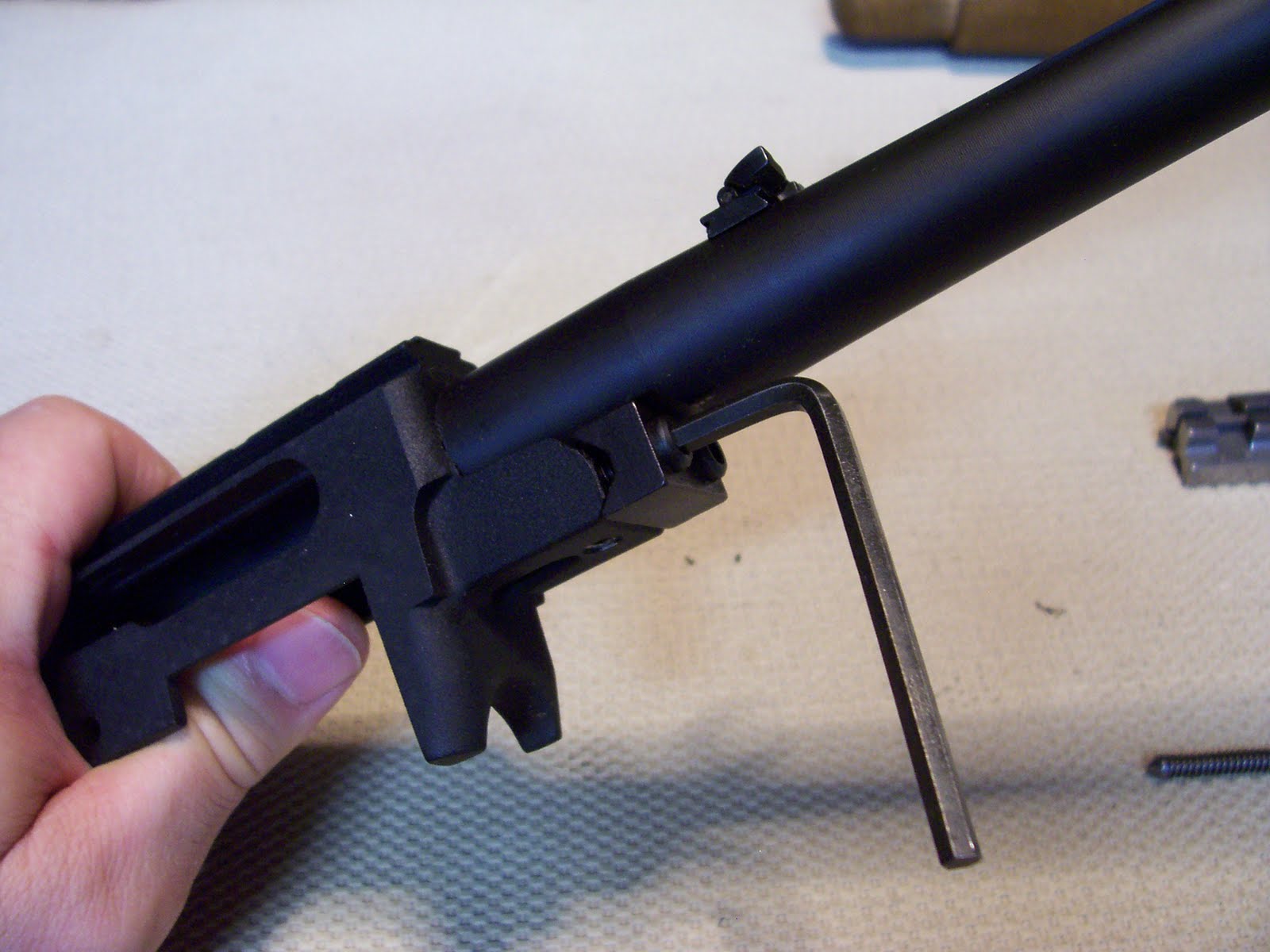
Next, I removed the factory barrel. The barrel is held in place by a barrel retainer and two hex head screws. Removing the screws, the barrel slides out. Actually, since my gun had 2,300 rounds through it, I had to put the barrel in a vise (protecting it with a rubber insert) and pound the receiver with a rubber mallet to get it to let go.

I then scrubber out the receiver and made sure it was ready for a new barrel.

Then, out came the new hardware.
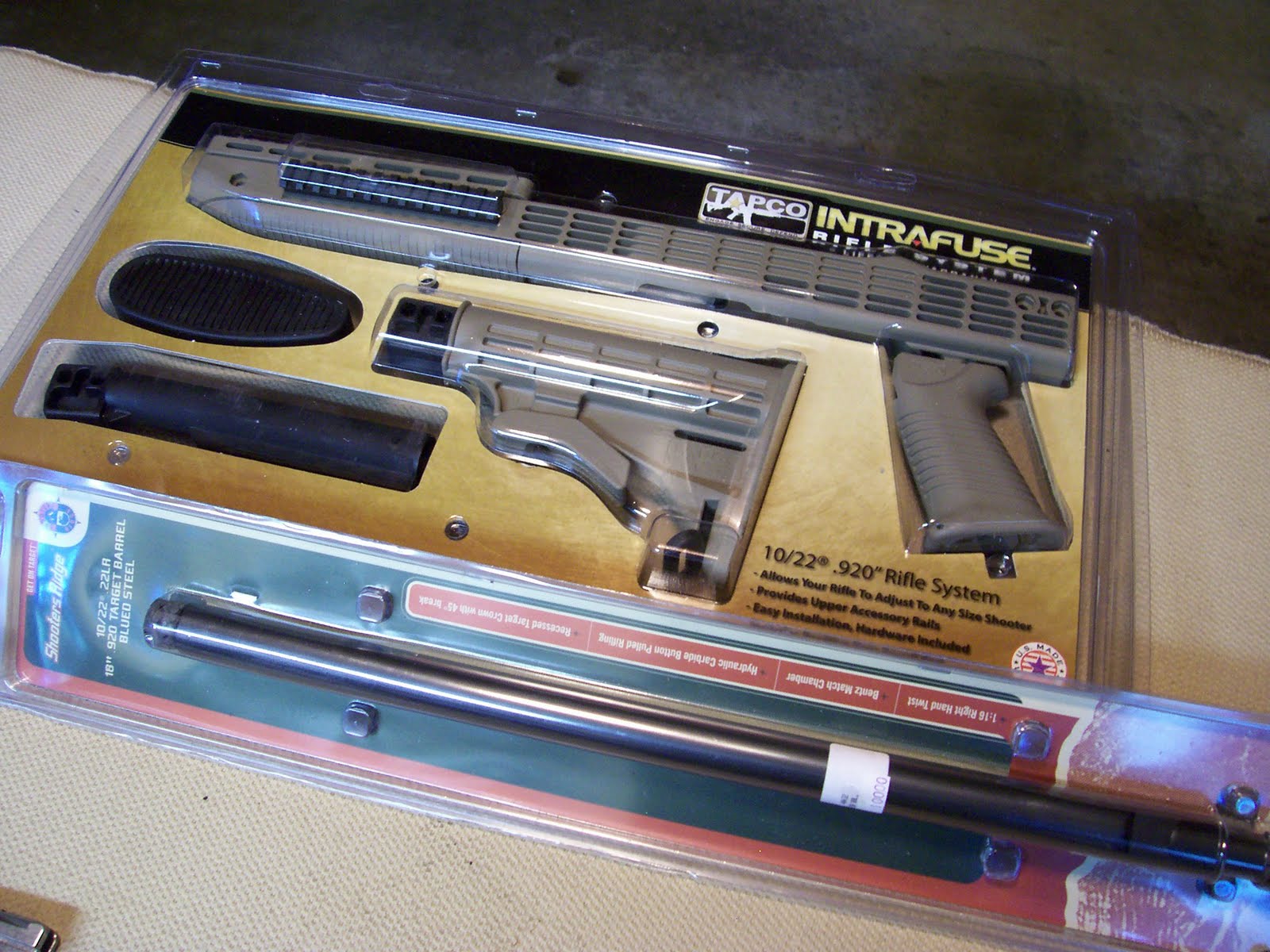
The barrel I chose was a Shooter’s Ridge bull barrel, that I bought at the gun show last weekend, and a Tapco T-6 stock I bought off of Amazon.
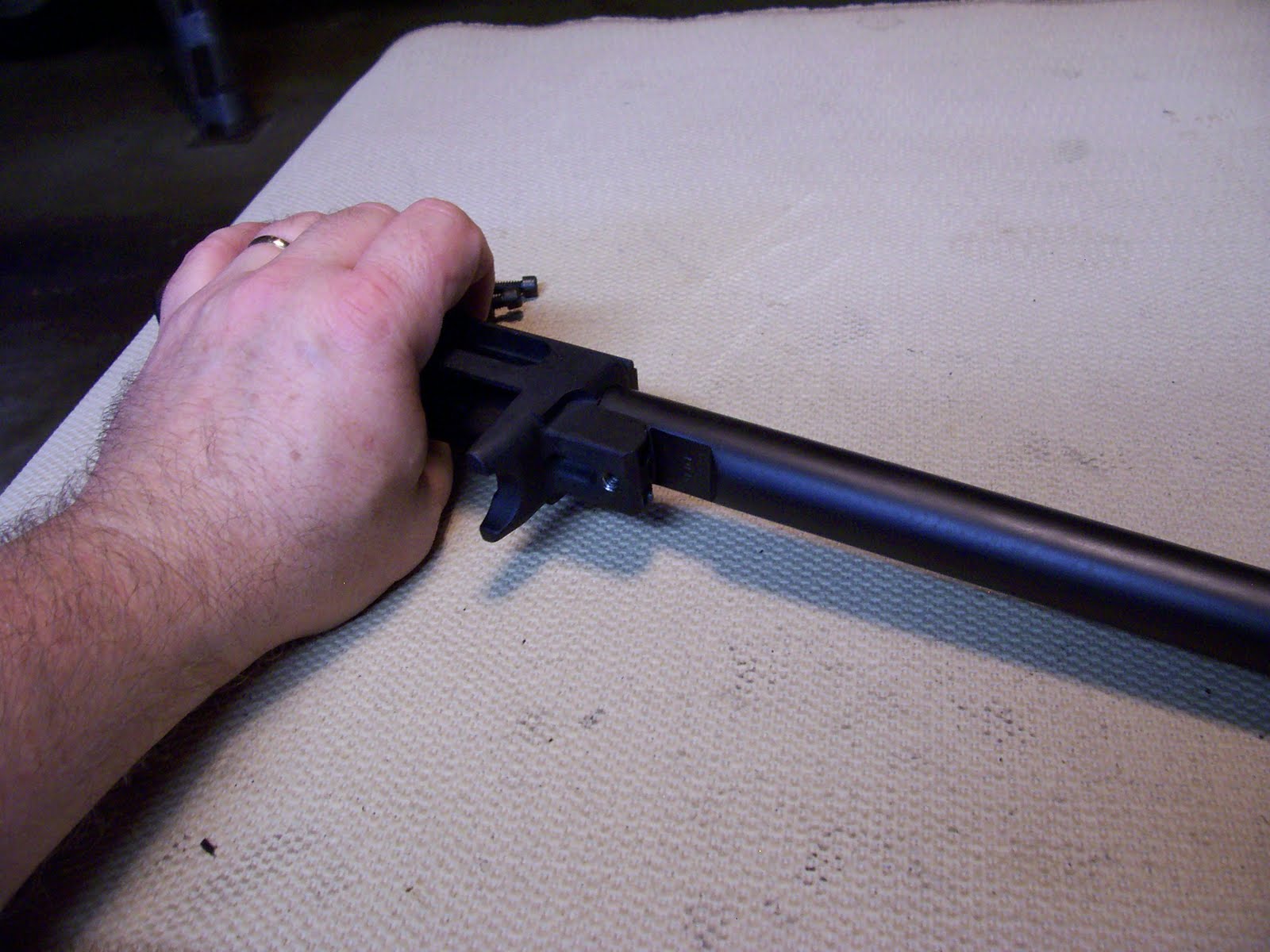
The barrel is installed in the reverse of how the old one was removed, but without the pounding and cussing. Slide the barrel into the receiver and line up the ridge for retainer with the retainer lip. Much easier.
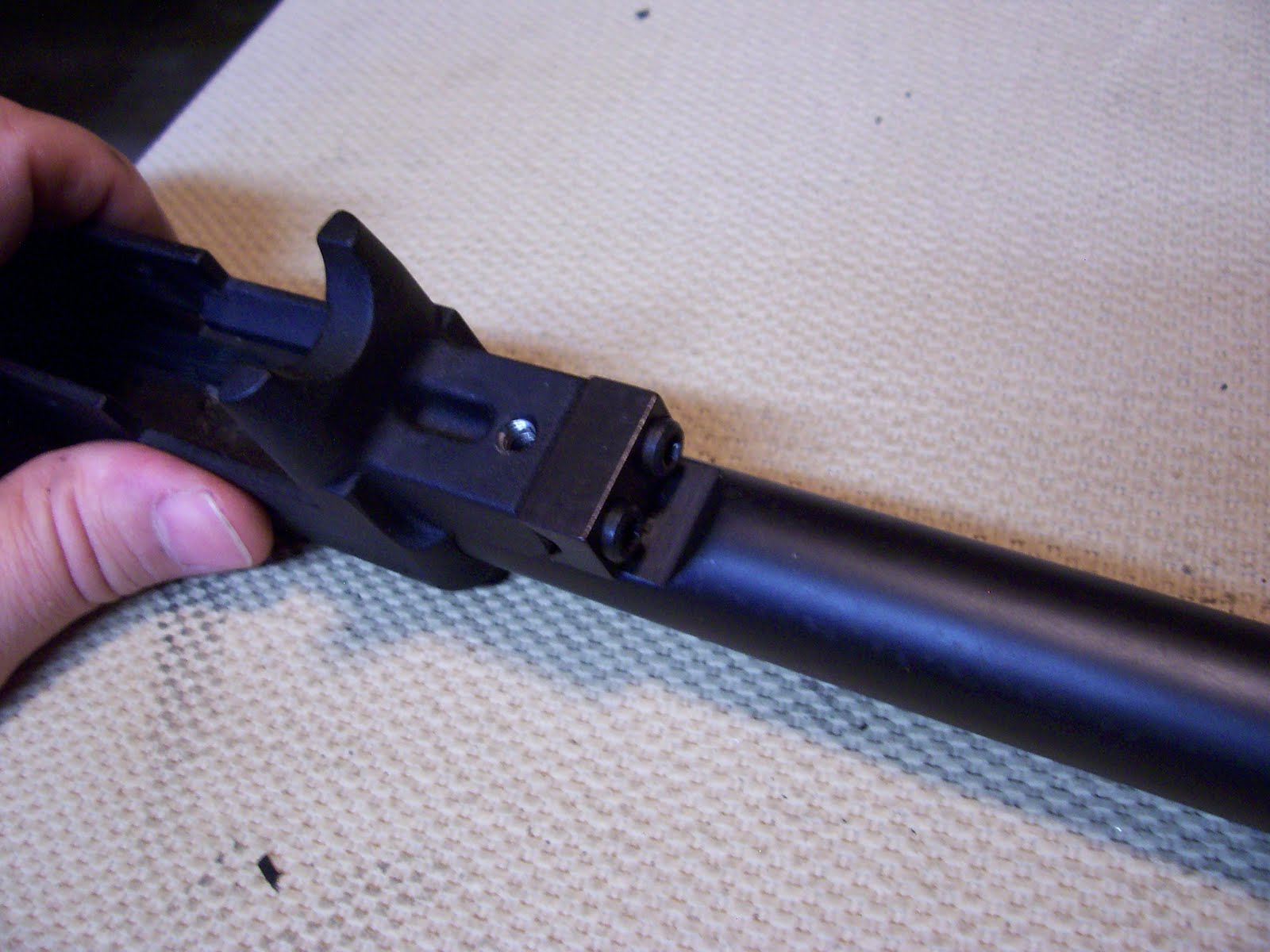
Install the retainer using the two hex head bolts.

Install the bolt, then the trigger group.
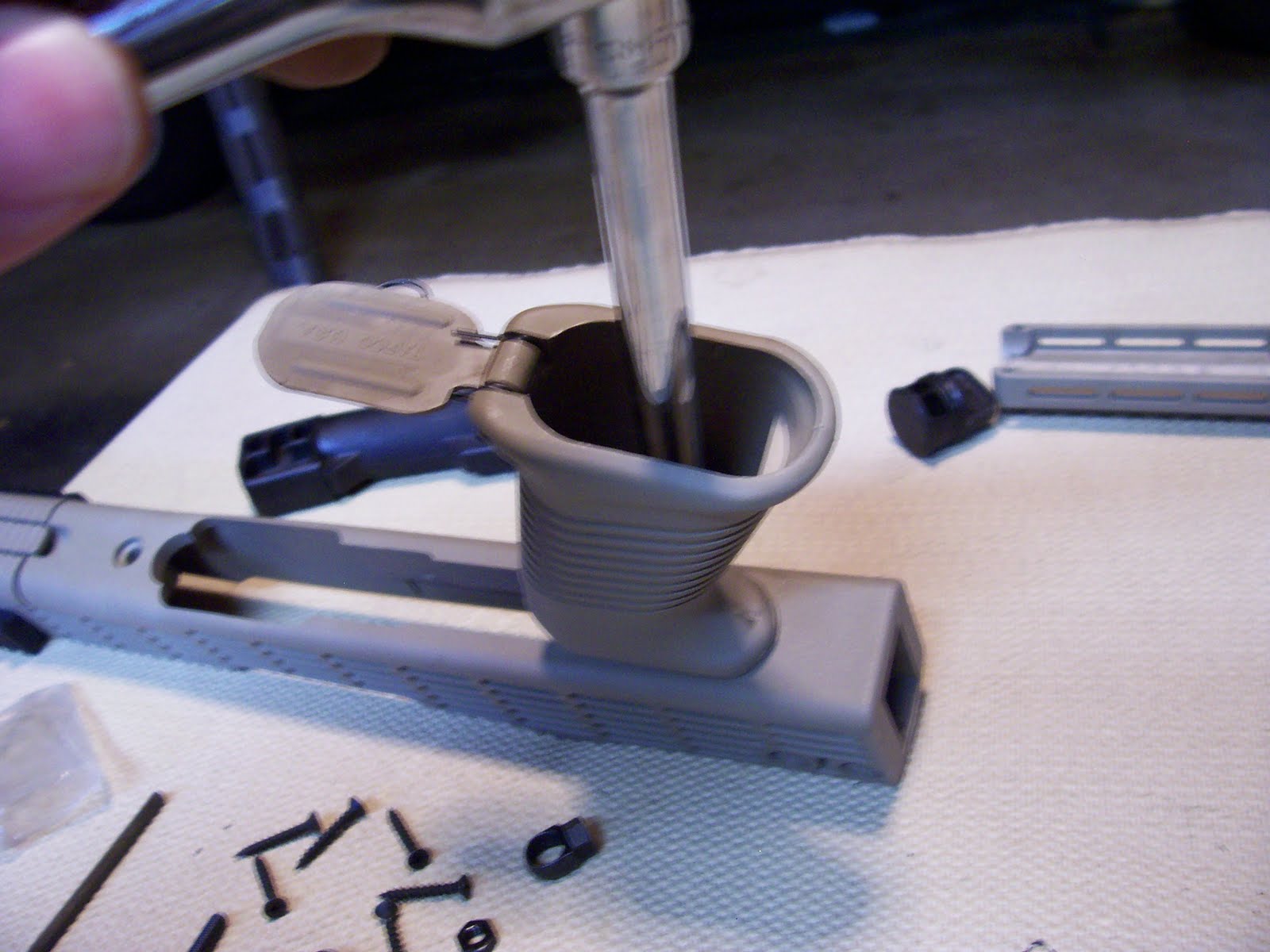
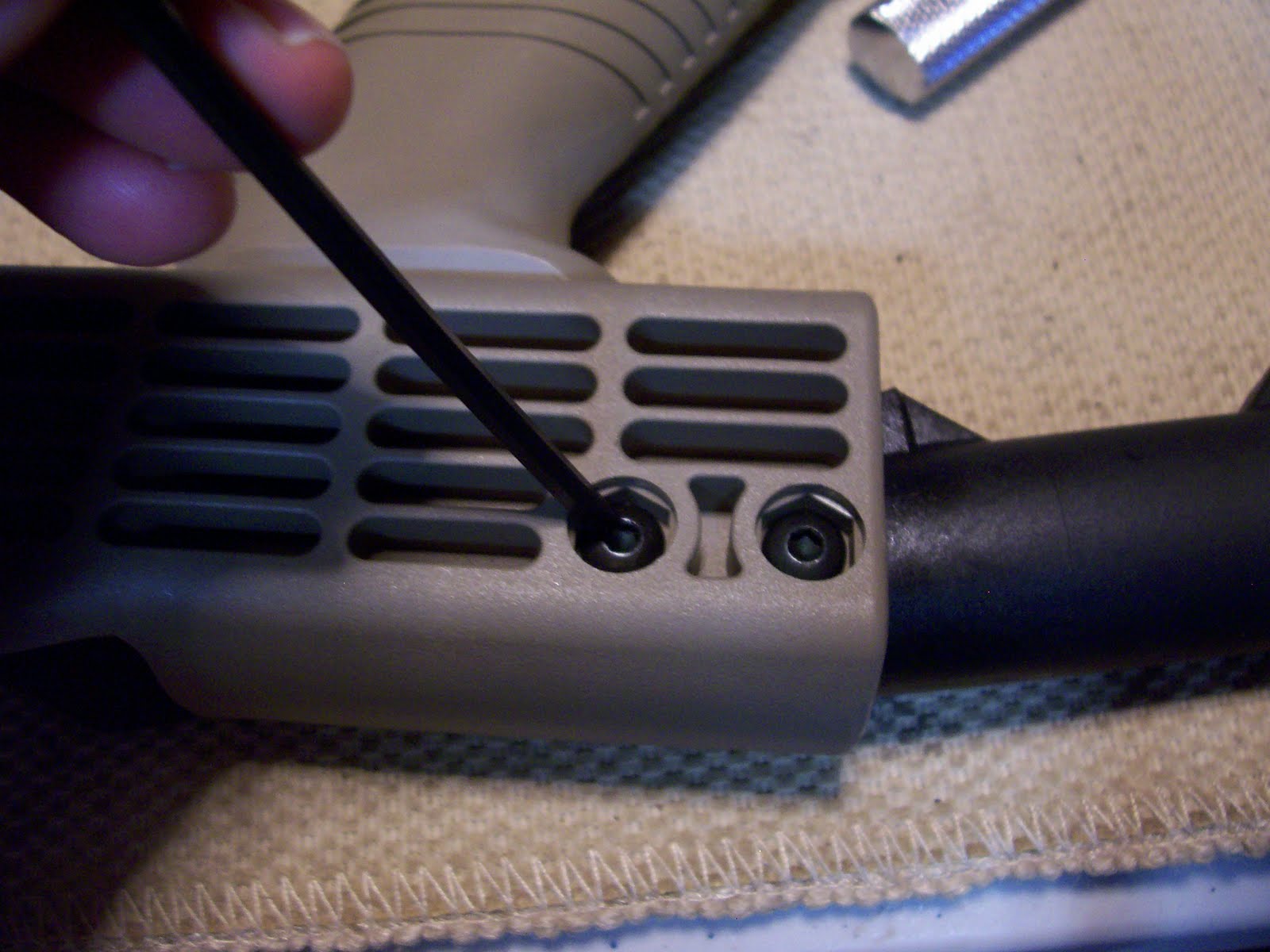
The Tapco stock takes a little assembly. The pistol grip is bolted on, and the stock is installed using two screws and bolts. Tapco includes two stock tubes, one slanted if your’re planning to use iron sights, and one straight if you’re going to use optics. I used the straight one.

Finally the barrel and receiver are installed using the take down screw from the original stock.

A hand guard is installed over the barrel, too.

It’s important to know that the barrel for a Ruger 10/22 should not be free floated, but should be supported on the stock per the manufacturer’s instructions. This has to do with barrel harmonics of the .22LR, and a free floated barrel will not be as accurate on a 10/22 as it would on a larger caliber rifle.
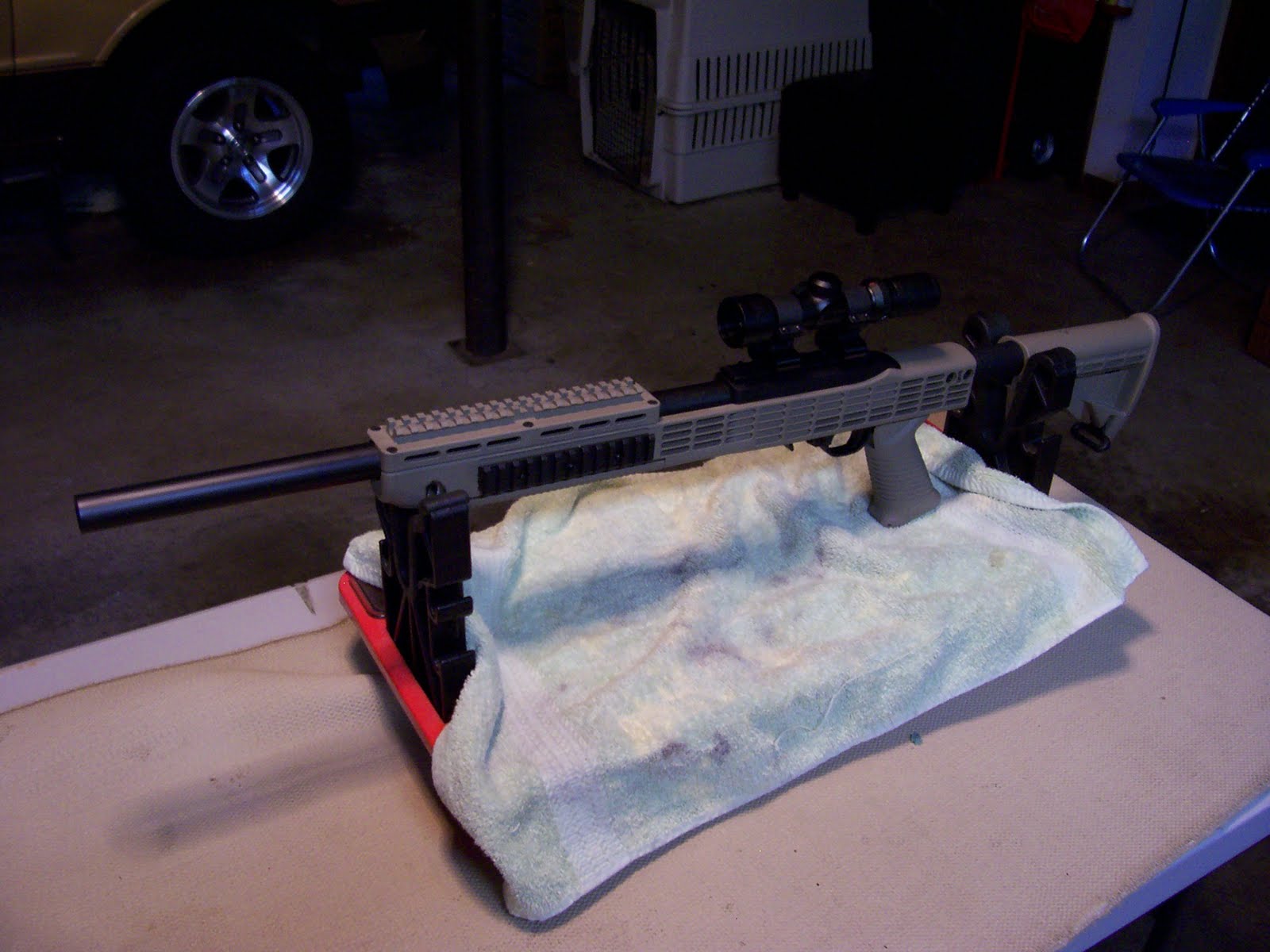
Finally, I installed a 2-6 x 28mm scope I had from a previous project, using some Weaver rings I had.

The final rifle is considerably heavier than the original, but is well balanced. The stock angle makes for an easy pointing gun, and set at 2x, the scope should do well even for close-in work.

Having said that, I am contemplating installing a 45 degree offset Weaver rail on the front rails, and installing a reflex or red dot sight for close-in shooting.

But, even without the red dot, at last, Captain America is ready to go fight the Nazis, or zombies, or whatever comes our way.

Tomorrow, the range!

* I’m not going to explain the history of Captain America. If none of these things – Bucky, Steve Rogers, the Super Soldier program – make sense to you, do some research.


Be Prepared, Part 7 – First Aid for the Range

I am taking a week of vacation next week, staying around the house to get some projects done, and planning a couple of range days. This got me thinking about the things in my range bag, and naturally, my First Aid Kit came to mind.

One of the best things I learned in Boy Scouts was First Aid. After taking countless first aid, CPR, and first responder training courses in my 26 years in the chemical industry, I have come to realize how really good the Boy Scout first aid training was.

Early in my career as an engineer, I was a little frustrated at how shallow the first aid training at our plant was. We learned nothing about splints, or tourniquets, or treating shock. But I soon came to realize the reason for the depth of training. In Boy Scouts, injured victims are extremely vulnerable out in the wilderness. There, your job in a medical emergency is to keep the victim alive until you can get back to civilization, and then to the hospital. In industry, all you have to do is keep the victim alive until the paramedics arrive. The time difference is extreme.

An injury at the shooting range is closer to the first situation than the second. Unless you’re at an indoor range in the city, chances are you are way out in the boonies, where it would take a paramedic crew a half hour to get to you, provided you could call them. I don’t know about you, but I don’t get a cell signal at the WMA where I take my son and the Posse to shoot for $5 a carload.

This means you need to be able to keep an injured person alive for at least 30 minutes, maybe longer, and for that, the normal car first aid kit won’t do. You need some kind of trauma kit that, at the least, helps you deal with a gunshot wound.

Fortunately, the state of the art in emergency medical care has advanced a lot since the Spanish American War when I was in the Boy Scouts. Compression bandages, clotting compound, and tactical tourniquets have all been developed since then, and you should have them in your bag.

Now, I’m not going to go into all that you should have in your bag. Bob Owens of Shooting Illustrated did an excellent job of that recently, and I can’t improve on his report. What I can do is tell you – have a first aid kit in your range bag.

In my bag, in addition to what Bob lists, though, I also have some regular adhesive bandages and a roll of first aid tape, because not all the injuries will be gunshot wounds. Fortunately, in my years shooting I’ve had to treat a lot of cuts and blisters, but no bullet holes.

Once you get a kit, get training. If nothing else, take the Red Cross Basic First Aid course, and make sure and ask the instructor to cover how to treat gun shot wounds at the gun range. While you’re at it, take a CPR course, and stay certified. You can find the American Red Cross in your phone book, or (if you’re like me and you throw that useless thing in the recycle bin as soon as it hits your driveway) you can look them up online.

The clotting agent and compression bandage makers all have videos on their websites, too. Watch them often, and know how to use them.

Above all, be prepared. Preparation means you stay cool, if and when an emergency happens.

GeorgiaCarry.org Annual Convention

GeorgiaCarry.org, the premier voice for the Second Amendment in Georgia, will be holding its third annual convention this weekend, at the Renaissance Waverly Hotel near the Galleria in Smyrna, and I will be there.

If you’re going to be at the convention, email me or send me a Twitter message and we’ll get together.

The deadline for buying tickets was last weekend, so if you don’t already have your tickets, you’ll have to wait until next year. But, GeorgiaCarry members can still attend the “Meet the Board” session from 11:00 AM to 12:00 noon. Just show your membership card.

Convention attendees can also enjoy a light breakfast, coffee, and a morning at the Sandy Springs Gun Club and Range , from 9:00 AM to noon, for just $5. Just bring your convention badge. A map to the range can be found here.

Product Review – M.A.D.S. from M2 Corporation

You’re armed with your Glock pistol, or a 1911, and you’re attacked. But, because of the situation, you can’t shoot. Maybe what’s behind your target prohibits you from shooting – remember Rule 4? But you’re close enough to use the gun as a striking weapon. If only you had something built in that would make this something more than the classic pistol whipping.

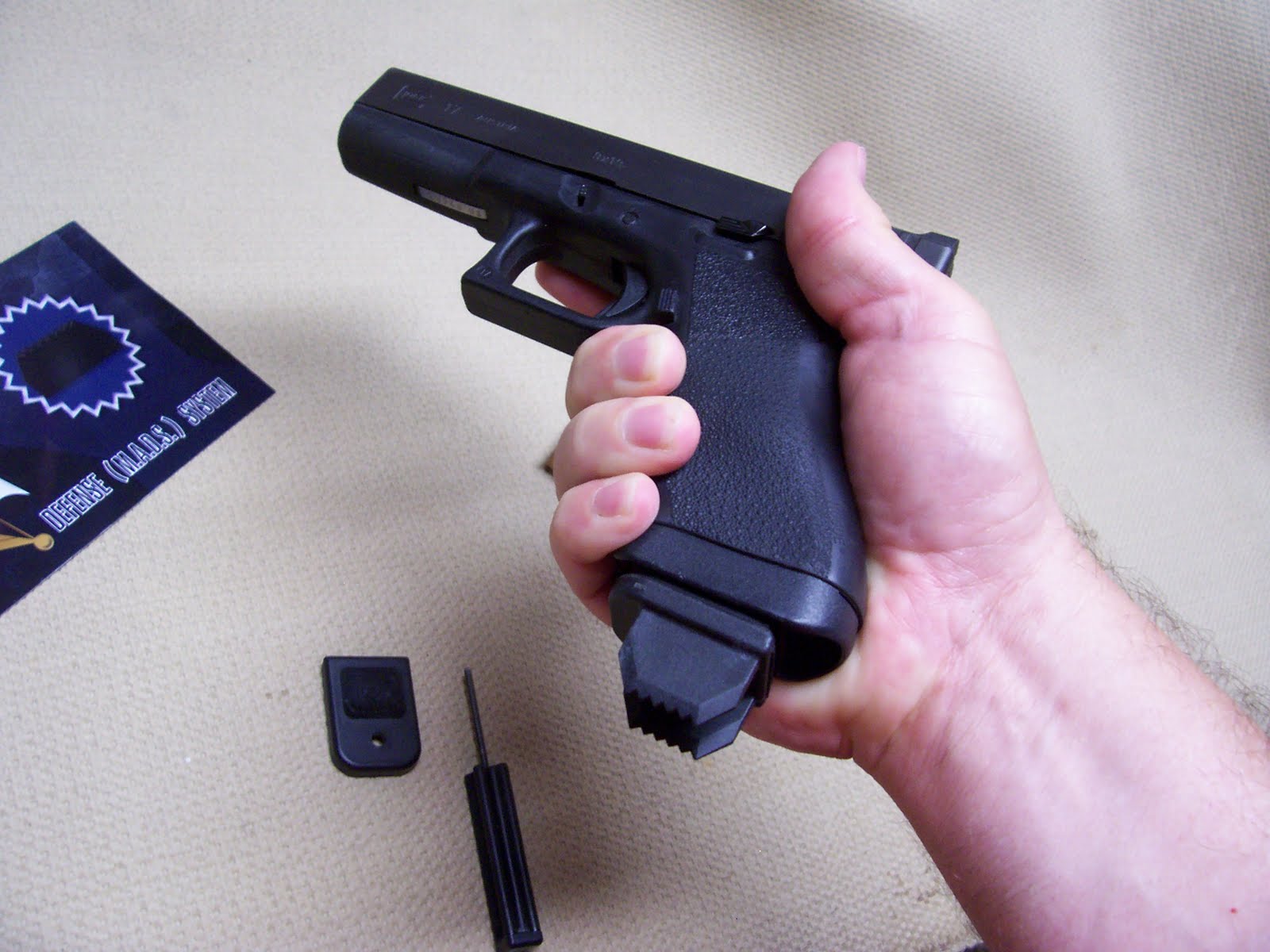
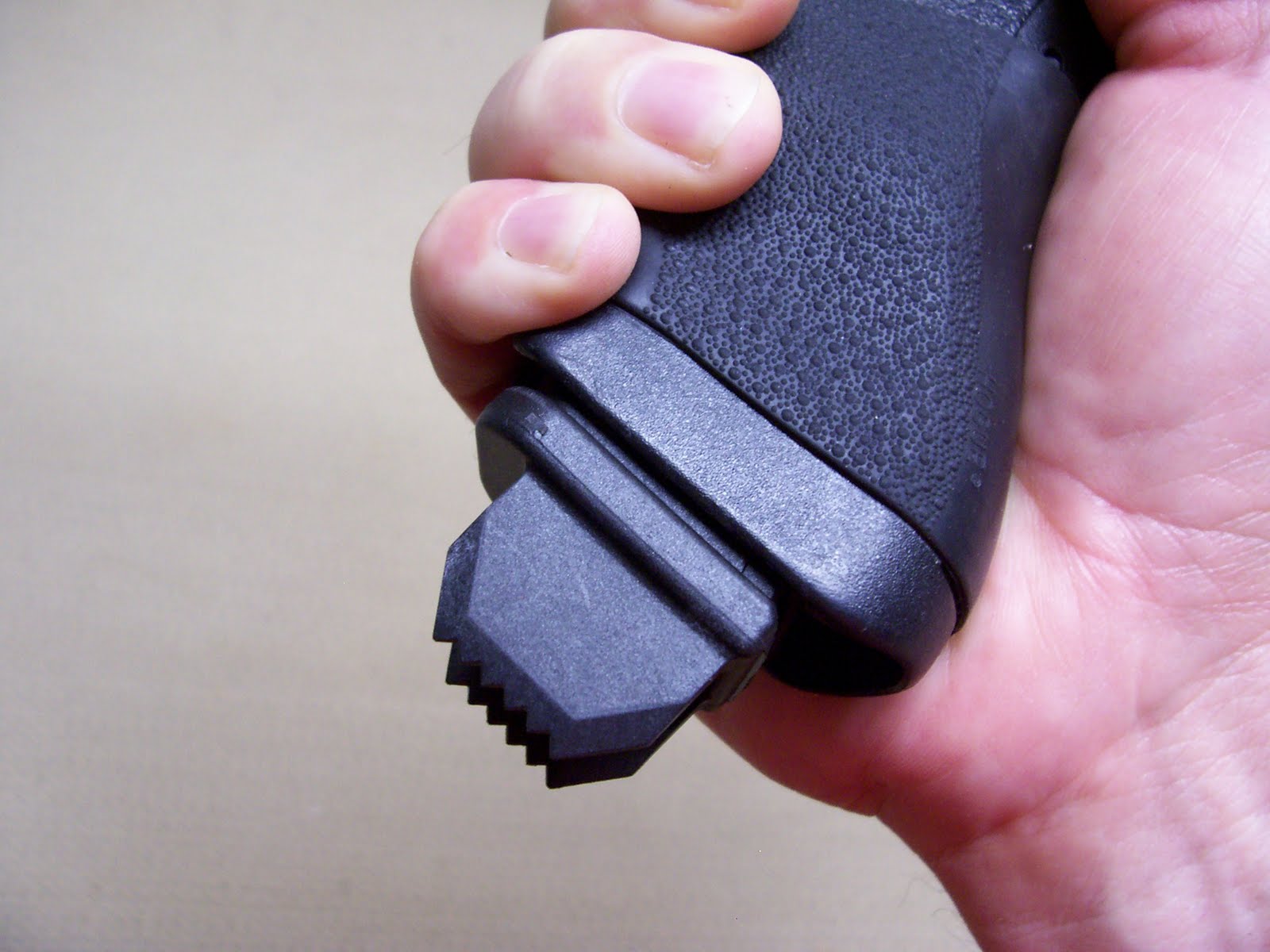
The Magazine Auxiliary Defense System, or M.A.D.S., from M2 Corporation, is a replacement floor plate for the Glock magazine. It features a pair of aggressively crenelated fins that protrude from the baseplate, and is designed to give the gun owner a back-up means of self defense, when circumstances keep him or her from shooting.

I received a couple of M.A.D.S. floor plates from Michael Wogelius, CEO of M2, to test, one for the Glock, and one set for a 1911. Since I only have Glocks, I’m probably going to give the other set to a friend with a 1911.

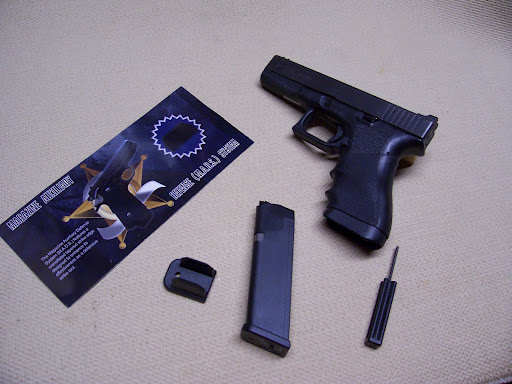
The floor plate easily replaces the normal floor plate on a FML or Gen4 Glock magazine. First, remove the old floor plate, using a Glock Armorer tool, or a punch – insert the tool through the hole in the bottom of the floor plate, disengaging the magazine insert from the hole in the floor plate. Leverage the floor plate toward the curved edge of the magazine. The floor plate will slide off of the underlying magazine insert and off the end of the magazine body. Be careful – the magazine spring is under a lot of tension, and it will come out.

Then, re-compress the magazine spring back into the magazine body, and follow it with the magazine insert. Then install the new M.A.D.S. floor plate in place of the old one.

It’s that easy.

M2 points out that the installed M.A.D.S. floor plate also acts as a way to grasp the bottom of the magazine in inclement weather, even with gloves on. I tried it using gloves and I had no problem.

The only problem I had was when I tried install the floor plate on an older, NFML magazine. Apparently the NFML magazine bodies are just a little shorter than the FML, and the M.A.D.S. floor plate was a little too thick to seat the magazine the first time. I had to press fairly hard to get it to seat. My recommendation, therefore, would be for users not to use this on NFML magazines, to prevent inadvertently losing your magazine because it wasn’t latched in place. (I know, because the first time I tried it, the magazine fell on the floor. Not good.)

Also, the Glock floor plates only fit the smaller frame Glock magazines, not the .45ACP or 10mm magazines. I don’t know if M2 has plans to introduce those, but I know there are a lot of folks with these larger guns who might be interested.

As with any defense technique, the M.A.D.S. system would take training and practice to use effectively. My concern would be that I would inadvertently put my finger on the trigger if I used my pistol as a striking weapon. But in trained hands, there is no arguing that a blow connected by a M.A.D.S. floor plate would definitely leave a mark, both physically and psychologically.

For further information, contact M2 Corporation at www.m2corporation.com.

The M.A.D.S. kit (gun, magazine, and armorer tool not included)

The M.A.D.S. floor plate installed. Wicked.

FTC Disclaimer: I was approached by M2 Corporation through LinkedIn and offered a free M.A.D.S. system, in exchange for a review, and photos of it on my gun. I received no other compensation, and the views and opinions expressed here are my own.