Adventures in Permitting

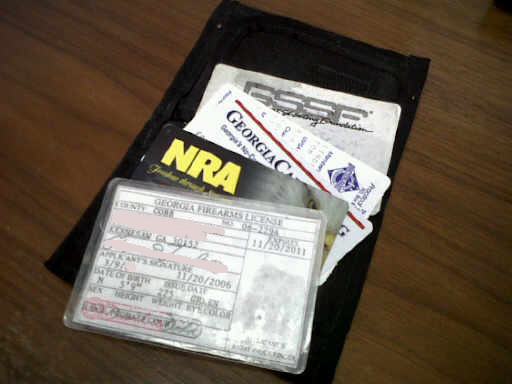
Since I’ve owned guns I’ve lived in three states, so I have had the pleasure of holding Concealed Carry Permits in three very different states. The processes to obtain and renew those licenses are as varied as they come.

I believe the Second Amendment guarantees to citizens the right to carry concealed firearms, and there should be no government regulation of that right for those citizens who can lawfully own a gun. But, living in the real world, we are forced to deal with the system we have. For those unfamiliar, there are basically three kinds of permit processes for concealed carry in the United States. The first is my favorite, so-called Constitutional Carry, and requires no permit. Vermont, Alaska, and Arizona currently have this system and a lot of others are considering it.

For states that require a permit for carry, there are two kinds of processes, May Issue and Shall Issue. May Issue means the permitting authority May Issue you a license if they deem you are worthy, and usually if you can prove the need for the license. In Shall Issue states, the permitting authority Shall Issue your permit, unless they can prove you are not eligible for the license. It really comes down to the burden of proof: in May Issue states, the burden is on the applicant to prove the need, while in Shall Issue states the burden is on the issuer to prove the applicant is ineligible.

When I first got a pistol, I lived in Alabama, which was and is a May Issue state. From what I know about other May Issue states, Alabama is the easiest to get permits. My experience was simple. I went to the Sheriff’s office in the county seat, and filled out an application, and paid $10. Five days later I got a call that my background check was clean, and I could come get my license.

Although the permit was good for only a year, renewal of the license was much easier. I went back to the Sheriff’s office and filled out a renewal application, and the clerk looked up my name in her computer to be sure I hadn’t gotten in trouble in the past year. She then called into the other room and told the Sheriff that she had a renewal, and told him my name. The Sheriff stuck his head in the room, looked at me, and said “Yeah, he’s good.” I paid my $5 and was on my way.

When I moved to Arkansas and wanted to get a permit there, I found a different situation. Arkansas is a Shall Issue state, and requires applicants to complete a training course, pay for fingerprints, and pay a $144 permit fee, that’s not refundable if the permit is denied. The permit is good for five years. At the time, I also had to list the serial numbers of no more than 5 guns that I would be carrying, which, to me, was de facto licensing of my guns. I got all the forms from the State Police office in my town, completed my training, paid to be fingerprinted, and mailed it all off. The law allows up to 120 days for the process to be completed, but six weeks later, I had my permit. Then five years later, I went through it all again.

When I moved to Georgia, I found a process that was about in the middle. Georgia is a Shall Issue state. I got a money order for the permit fee and background check fee, and went to the county courthouse. The application was easy to complete, and fingerprinting was actually done by a scanner rather than the traditional ink and paper. Four weeks later I had my permit, although the law give them 60 days. Georgia’s permit is good for five years, and I realized recently that I’ve lived back here long enough to have to renew my permit for the second time. My, how time flies.

Another interesting point here in Georgia is some changes that happened last year. For a long time, knives with blades over five inches were in a regulatory black hole. The law covered knives under five inches, but there was nothing about knives longer than that. The fix – a couple of sentences in a gun law passed in 2010. One changed the name of the Georgia Firearms License to the Georgia Weapons License, and another said that handguns and knives were weapons. Done.

So, how do I feel now about these processes?

  • I advocate Constitutional Carry in all 50 states and DC. In the era of instant computerized background information being available to law enforcement, the argument that it provides security to officers is no longer valid. It just remains a de facto tax on gun owners that should be ended.

  • I know there are times, like when purchasing a gun, where having a permit makes the process quicker, because the permit holder has already been checked out, and there is an active record of that check. But, a gun owner could choose to pay for a voluntary NICS background check, and have proof of that handy when buying a gun.

  • I would recommend training to anyone who is considering owning a gun for protection, regardless of whether you plan to carry concealed or not. But, I would not require that training as a condition of getting a permit.

And now, if you’ll excuse me, I need to set a reminder to renew my permit this fall.

Getting Better by Going Small

One way I have found to get better at shooting is to make the target smaller, and make the caliber smaller if you can. An example – this past weekend I spent a couple of hours shooting bumblebees with a regular old Daisy BB gun. I stood on my driveway while the bees flew around the gutters on the back of my house, which are full of pollen these days. I figure most of the shots were from about 20 feet, and although they did go out to maybe twice that, I didn’t have any success out much farther than 25 feet.

Shooting bees with a BB gun is as hard as it sounds. In fact, I played around with the photo above, so that the bee is just about life size, to give you an idea of what you’re up against. But with practice, you can get pretty good at it. It uses a lot of the skills you need for wing shooting or trap – you basically follow the bee with both eyes open, and use the front sight of the gun like the bead on a shotgun. The difference is a clay pigeon doesn’t bob and weave.

I hit two bees while in flight, and believe me, when you can shoot that way, then when they land, they’re toast. A third bee landed on the under side of the gutter, and my first shot hit him mid thorax.

A quick word, if you try this – remember Rule 4! Always know what is behind the bees in case you miss. In my case, there’s 20 acres of woods, but if I slide around trying to get a better shot, the end of the parabola is probably in a neighbor’s yard, so I hold fire and move back around.

This isn’t my only Go Small drill. I also cut out some pieces of aluminum in the shape of a tombstone target, but sized much smaller. By making a 2 inch target, and setting it at 33 yards, I simulate a 2 foot target at 400 yards. Once I work out how high to hold, I can usually get hits half the time after that. The aluminum makes a nice ping, and down it goes.

My son and his friends had a ball with me Saturday, shooting these tombstone targets. Then I set out some 5 inch clay pigeons, and they didn’t stand a chance. Once they could Go Small, the bigger targets were easy.

We started out a couple of years ago, shooting 8 inch aluminum pie pans hung on the back fence, about 40 yards from the driveway. Unless it’s windy and they are swinging and fluttering, though, these don’t seem quite the challenge they once were.

Now, I’m not the first to discover this. I remember reading Rogue Warrior by Richard Marcinko, one of the founders of Seal Team Six. His standard was to use 3 x 5 index cards as targets for his Seal Team, since it represented the size of the target zone on a terrorist. It stuck with me, so I must give credit to Dead Eye Dick. Thanks!

Making Safety First Nature

I am a chemical engineer by training. All my life, in school or at work, safety and safety training has been the first thing we give our attention to. So when I started shooting, gun safety was foremost in my mind, and I’ve worked to keep it that way.

So when my wife and kids wanted to learn to shoot, I started by teaching them the rules of gun safety. In the case of my kids, I started early, and I repeat the rules often. For instance, the Rules of Gun Safety are posted in my garage and in my son’s game room:

0. Always wear eye protection, and hearing protection where warranted.
1. All guns are always loaded.
2. Never let the muzzle cover anything which you are not willing to destroy.
3. Keep your finger OFF the trigger until your sights are on the target.
4. Always be sure of your target and what’s behind it.
5. Never try to catch a dropped gun.

These modeled on the classic rules first listed in this form by Lt. Col. Jeff Cooper at the Gunsite Academy. The fifth rule comes from a recent an article in Shooting Illustrated by Chance Ballew of the Say Uncle blog. Rule Zero, or “Eyes and Ears!” as we call it, should be obvious, but will probably be the topic of a future post.

So, how do you teach these things so they become, not second nature, but first nature? Simply, by making training an everyday thing. Even the Bible says in Deuteronomy 11:19, “Teach them to your children, talking about them when you sit at home and when you walk along the road, when you lie down and when you get up.” When you see a gun rule violated on TV, point it out. Even better, when you see an actor or policeman or soldier on TV following a rule, point that out, too. Positive reinforcement works.

Sometimes, though, the training has to get tough. My son has a Daisy Lever Action Range Model BB Gun (alas, not with a compass in the stock, or this thing that tells time) that we gave him as for his birthday when he was 9. At that time, I kept it in my gun safe along with my other rifles, and we would only take it out to shoot together.

One day, I took it out and handed it to him. He checked to be sure the safety was on, and turned it muzzle down. As we got the rest of our gear out, I asked, “Hey, is that loaded?”

He shook it, and there was no sound of any BBs, so he said, “No.”

Wrong answer. “Sorry, Bud, what’s Rule Number 1?” At that point, the gun went back in the safe, and we had to wait to shoot another day.

Thus began the weeping and gnashing of teeth, but I held firm to my decision. Was I cruel to a young child? Or just being a tough teacher? I can tell you that he still remembers, 5 or so years later.

When we are on the range, we call each other on the rules. If someone has a finger inside the trigger guard, we call “Finger!” And if someone gets careless with the muzzle of a gun, we are all free to help them point the muzzle down, and call “Muzzle!” And because of that day with the BB gun and Rule 1, he knows that flagrant violations will make me call a stop to the shooting session.

Does the training work? For me, consider I’ve been shooting for fun and competitively since 1992, and I’ve never had a negligent discharge, nor been disqualified from a match for any reason. For my son, I think this says it all – when he and his friends break out the Airsoft or Nerf rifles for a little force on force “Tactical Tag,” every guy in the group has on safety glasses, fingers outside the triggers as they move, and move with muzzles pointed in safe directions. And as a bystander, I’ve never been hit by a stray round, which must speak to Rule 4.

Other People’s Money

I am the proud owner of three Glocks. That’s Bruce in the middle, flanked by The Duke and Liberty. I’ve built this modest collection all on other people’s money.

Bruce was bought with the proceeds of some stock options that I had to exercise after changing jobs in 1992. I was fine with just one Glock for a while, but after a few years I wanted to add a second gun. My company had a sales contest one fall, and I managed to win enough Visa gift cards to buy a G21SF using my GSSF discount. This one I named The Duke.

Then, 2 years ago, I won a Glock in a random drawing at a GSSF match. A Glock 19 named Liberty joined the gang.

It doesn’t stop with Glocks. I’ve also used a company safety bonus to buy a very nice used Mossberg 500, bank bonus money to buy an SKS, and another sales contest to buy a Ruger 10/22.

The best deal – a coworker called me one Saturday from a gun show. He had found an excellent deal on a couple of Mosin Nagants, which he described as in excellent mechanical shape but needing substantial cleaning. His offer: if I would clean one of them for him, I could have the other one for myself. I agreed. Welcome, Vassily!

Now, if I could just figure out a way to get other people to pay for ammo!