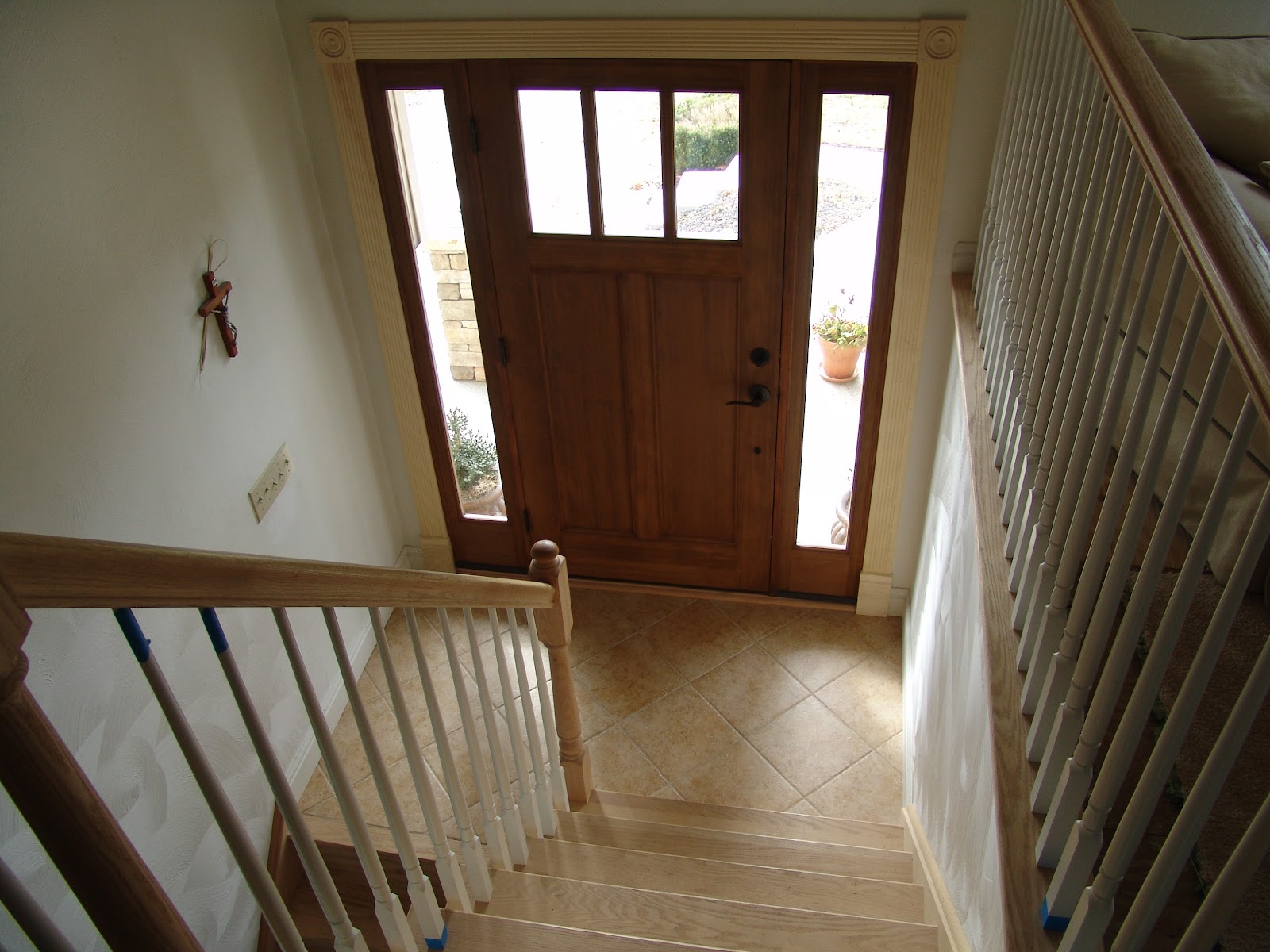
Be Prepared, Part 10 – Dealing With The Front Door

“It’s just a bizarre set of circumstances. The bottom line is, you point a gun at a deputy sheriff or police office, you’re going to get shot.”
– Lt. John Herrell, Lake County FL Sheriff’s Department

At 1:30 AM on July 16, 26-year-old Andrew Lee Scott did what a lot of people might do. When there was a loud banging on the front door of his apartment in Lake County, Florida, he grabbed a pistol and answered the door.
Deputies were looking for an attempted murder suspect, and found his motorcycle parked in front of Scott’s apartment. So, they knocked on his door without announcing they were police.
Robb Allen at Sharp As A Marble probably said it best when he referred to “lethal levels of Fail.” There were so many mistakes made on both sides of this that the lessons should be self-evident. But I wanted to go through them, and talk about how I addressed this with my family last night, so that you might be prepared.
HAVE A PLAN
Everyone in your household needs to know the plan, and needs to follow it. You have fire drills at your house – you need to practice this, too.
Only the eldest person home answers the front door after dark. If my kids are home alone, they don’t answer the door. Period. If they are seen and called to by someone outside, they can deal with them at that point. But they don’t open the door to someone they don’t know.
FOLLOW THE PLAN
If someone knocks on my door late at night, we don’t open the door. It’s that simple.
I will go to the door with a pistol either holstered or concealed behind my back, and with a phone. We first find out who it is, by turning on the front porch light, and looking out the front window at the porch. (If your house isn’t set up that way, you need to have some way to see those people.)
If they are people we know, and they don’t sound under duress, and there are no others with them that we don’t know, only then would we open the door, and deal with the situation.
If they are people we know, but they sound under duress, we find out why and assess the situation from there. If they have trouble and need my help, I would decide which way to go.
If they are not someone I know, I will call 911 and tell them help is on the way, but I’m not opening the door. Not if it’s raining, or winter, or the baby is sick. It sounds cruel, but I would rather that, than for you to read about me the next day, killing by home invaders.
IF IT’S THE POLICE
If they claim to be the police, I would tell them I am calling 911, and do so. I would tell the dispatcher that the police are here, and ask why. If they have legitimate reason to be there, I would put my pistol away, and open the door, and follow their instructions.
It is vital that at no time would I show a gun or other weapon to someone at the door. First, if they are police, they will shoot me.  If they aren’t police, they could call 911 themselves and report me for assault. Yes, I could present a positive defense under Georgia’s Castle Law, but that would still involve being arrested, hiring a lawyer, and lots of money.
WORST CASE
Of course, if someone forces their way through my door, I will have a split second decision to make. If they are police, I need to follow their instructions completely if I want to live through this. For me, this is vital. I have quite a smartass disposition, and a more than a little bit of a Don’t Tread On Me attitude. The key here, though, in every situation, is to de-escalate, so that, hopefully, no one has to get hurt. And certainly, things turn out better for us than they did in Lake County.

GSSF River Bend Ballistic Challenge V

Photo courtesy of Glocking Tall
On Sunday July 15, 2012, I traveled to the River Bend Gun Club in Dawsonville, Georgia, for the GSSF River Bend Ballistic Challenge V.  
As usual, I shot my Gen2 Glock 17 Bruce, and it performed perfectly, as expected. For those unfamiliar, you can refer to the GSSF course of fire here. 
MATCH PREMLINARIES
The GSSF course of fire consists of ten strings – 4 on Glock the Plates, and 3 each on 5 To Glock and Glock M. So, owning 11 magazines, I am able to pre-load my magazines and not have to do so at the range. That’s a nice thing.
One thing to remember is that we are allowed 11 rounds total per string, so if I load all my magazines with 11, and I don’t shoot the gun dry, I will need to strip one round off the next magazine before using it.
In fact, since 5 To Glock is exactly two shots per target, with no chance of make-ups as there are on the other two stages, I load my magazines 11 – 10 – 9. Then, I have one in the chamber after the first two strings, but the slide is closed. And, the slide locks back empty after the last shot, so showing clear is simple.
Before the match I did my usual pre-match checklist
Life has a way of throwing curve balls, though, and one thing I learned in baseball was never to sit on a pitch, that is, never assume you know what’s coming next.  This came to the forefront with a pre-match malfunction.
For dry firing I almost always install my plastic 5.11 training barrel. However, during the course of practice, the end of the recoil spring must have slipped off the notch in the barrel, because I couldn’t get the slide to slip off as I disassembled it, no matter how hard I tried. I tried everything I knew to get the slide off, to no avail. Finally, I had to resort to cutting the guide rod, and replacing it with a spare.
SHOOTING THE MATCH
When I arrived, it had been raining, sometimes hard, for about an hour. Footing was still good, but some stages had the cardboard NRA targets covered with plastic to protect them.
I elected to shoot Glock The Plates first, without a warm-up round, since the plates weren’t affected by the rain. Bad idea. I left 4 plates standing my first round, and I could tell from the paint missing from the support that I had been shooting low and a little left, meaning I was jerking the trigger. I know enough from golf not to try and diagnose and fix problems mid match, so I just aimed a little high and right, and I had no misses the rest of the day. My Plates runs were in the mid-7 second range, which was about a second longer than normal, but that was okay.
I had one other close call, when I flinched on one of the long 25 yard shots on 5 To Glock. I called the shot low, and I thought it might be a miss, but it was a D, low and left. Even the RO commented when we were scoring. Some of my other 5 To Glock shots were in the D range, and those 3 second penalties hurt.
Some time while I was waiting for the third stage, Glock M, it stopped raining and the sun came out, all in the space of about 2 minutes. The temperature climbed, but the humidity stayed the same – 100 percent.
All this meant good hydration was essential. I had already drunk about 300 ml of the 1L of sports drink I had brought, and I drank another 500 ml while I waited, and ate a couple of granola bars. Of course, none of this alleviated the temptation to walk across the way to the Holy Smoke barbecue stand operated by a local church. The wind was blowing that tempting smoke our way all day. But I resisted.
I shot the last stage in a decent time, with all Alphas and three Charlies. One thing I did now that the sun was out was step forward a foot or so, so that my fiber optic front sight was fully illuminated by the sun. This helped a lot.
All in all, my overall match score was 188.1, not a good time at all. Four Mikes and a bunch of Deltas, combined with subconsciously slow shooting in the rain, add up.
AFTER THE MATCH
There are usually a decent number of booths at the Dawsonville match, but a lot of them called it quits during the rain, before I arrived. So, I didn’t get to buy any cool Glock items.
I did pay a visit to the factory Armorer, even though Bruce had been given the once over just a couple of months ago to relieve the Gen2 frame. I also told him about my training barrel incident, and he gave me a new recoil spring, making this the third year in a row my recoil spring has been replaced. Everything else was fine, though, as I expected.
I was tweeting after the match, and found a new blog, Glocking Tall(@GlockingTall), whose author was at the match as well. I am looking forward to getting to know him, and I added him to the blog roll today. 
So now we wait for Glock to post the scores. I won’t win a gun for coming in first, but in a few weeks the final scores will be posted, including the random drawings. There’s hope for me yet.

Beat The Summer Heat


I first posted this last year, and several things this week (Walt White’s podcast and an extended conversation on Twitter) suggested that I needed to be reminded from time to time. I also want to thank Walt, MIguel, David, and Keith for their advice and guidance. 


I titled this entry Beat the Heat, but it is my experience that we cannot beat the heat – the best we can hope for is a tie. Here are some things you can do to make shooting in the summer heat safer.


For any system, we have inputs, a process, and outputs. Our goal is to keep the process – our bodies, shooting effectively – in control, and minimize the effects of the heat.


The inputs to this process are sunshine, body heat from exertion, electrolytes, and water. The process, our body, generates its own heat, and generates outputs of movement and thought, and also generates liquids in the form of urine and sweat, which keep the body flushed and cool.


So, how do we keep the desirable processes – thoughts and movement – optimal? By making sure we mitigate the effects of the inputs:

Be sure to wear sunscreen, preferably 50 SPF or better, and use the waterproof kind if possible. I carry a bottle of this in my shooting bag, and it occurs to me that I should have a spare bottle in my Get Home Bag. In my experience, the spray on kind of sunscreen doesn’t work for me, but if you like it, and it works, use it.

If you find you are susceptible to sunburn you may need to re-apply the sunscreen as needed.

Try to stay in the shade when possible. If you’re practicing and there is a covered shooting area, use it. If not, consider erecting a canopy of some sort, or bring an umbrella. 

Wear smart clothing. There are all kinds of breathable sports shirts on the market now, and I wear one when I shoot matches. In fact, I have found that 100% cotton tee shirts are uncomfortable after a few hours, as they become sweat drenched in the sun. Instead, consider investing in a sports shirt like the ones from Techwear or Nike . 

Wear a hat, to keep the sun out of your eyes and off your scalp. Consider a hat with a wide brim like Walt’s boonie hat or cowboy hat. However, this will mean you may have to wear earplugs and not muffs, unless you have the kind that go behind your head, or can roll up the brim while you shoot. 

I wear shorts when shooting, but if you will be venturing into dry brush, or your legs are susceptible to sunburn, consider lightweight BDUs or other long pants.

Drink plenty of liquids, before during and after you shoot. Start the night before, and continue drinking during and after the shoot.

Here’s one place I have changed my thinking. I used to feel that I didn’t need full strength sports drinks, as they have way too many electrolytes and calories for what I do. They were designed for football players and runners, who are burning a lot more calories that I do shooting.

So, I drank only water, and I found that by the end of the day my legs were sore. Then one match I tried diluting sports drink to half strength, and I found that I wasn’t sore. It’s almost like the makers of the sports drinks know what they’re doing. Hmm.

Consider a bladder backpack, like the Camelback, if your shooting allows it. I don’t take mine to matches, because I would be taking it on and off all the time, but I have worn it for casual shooting. 

Now, here is why I mentioned urine. One way to know if the process is working is to know if the inputs are matching the outputs. So, you need output. There is a saying I have heard from someone who is currently being paid to work in the Middle Eastern sun – “If you’re not peeing you’re not drinking enough.” You should be visiting the bathroom at least once an hour if you’re correctly hydrated. 

I have a neck “snake” filled with a water absorbing gel, that I soak in water and put around my neck when I’m waiting my turn to shoot. I bought mine at a state fair about ten years ago, but Miguel pointed us to some on Amazon. 

Take a chair and rest when possible. This reduces the amount of heat you generate internally. 

If you collect fired brass, and it’s been sitting in the sun, consider wearing gloves. Those suckers can be very hot. I say this from experience. Store your guns in the shade when not in use, for the same reason.


I hope you find this useful, and I welcome other suggestions.

Pistol Choices

I’ve recently read several posts from other bloggers about their choices of Every Day Carry (EDC) pistols, and how they arrived at those choices. This got me thinking about my own thought processes, what I’ve chosen, and why.


GLOCKS


Anyone who’s read this blog more than once knows that I own Glocks. While I sometimes play the devil’s advocate to others about their gun choices, I’m not going to fault anyone for choosing the guns they own.


I can, though, tell you why I own my Glocks.


G21, G17, G19


I bought my first Glock 17, Bruce, in 1992. At the time, Glock was about the only affordable “high capacity” handgun on the market. I picked 9mm for the same reason I have them now – availability and cost of ammo. It helps that modern 9mm defensive ammo is almost ballistically comparable to .45ACP. But that’s another posting.


I got my other two Glocks, a G21SF and a G19, by way of my membership in the Glock Sport Shooting Foundation. The G21SF I bought at the Law Enforcement price, and the G19 I won in a GSSF match. So my choices of gun came about as much by serendipity as it did by conscious choice. 


My next choice in a handgun will probably be a Glock, because I and my family already know how to run them, and I already have spare parts, magazines, holsters, and the like.


Now, if a similar circumstance arose for me to acquire a similar striker fired polymer gun, I wouldn’t hesitate to do so. With enough practice and training, I and my family would learn to run them just as well.


Having said that, I don’t think I would ever get a 1911 as a home defense or personal carry gun. There are several reasons for that.


In my home, besides me, are my wife, son , and daughter. Each of them has shot and trained with these guns. They know how they work, and they are comfortable shooting them. In an emergency, I would not hesitate to assign them each a Glock, and they would not hesitate to carry it and shoot it if need be.


However, the weight, reliability, and complexity of the 1911 precludes my family from ever being able to rely on them. This can best be illustrated by relating a story I heard from someone who is a frequent guest on a lot of the podcasts I listen to, who claimed that the 1911 was a superior gun precisely because it was so complicated that, if he lost it or it were taken away, an assailant would not be able to operate it. I thought that was one of the most ridiculous statements I had ever heard, especially since I am more likely to need to enlist someone’s assistance than I am to lose a gun to an assailant.


So, here is the current batting order, as it were:


Batting first, as EDC, is my Glock 21SF. About 90 percent of the time I carry it on a belt holster.


Batting second, in the top shelf of my pistol safe, is my Glock 17. It also doubles as my competition gun.


Batting third, on the bottom shelf of my pistol safe, is my Glock 19. 


Now, when the Glock 17 goes off to compete, the G19 pinch hits, and moves to the top shelf of the safe, with a G17 magazine installed. 


And, in the times when circumstances preclude my carrying the G21, the G19  goes in a IWB holster under a tee shirt or polo. The G21 goes on the bottom shelf of the safe.


Note how this is arranged: there’s always a 9mm Glock on the top shelf of the safe, and there are always loaded spare G17 magazines on top of the safe with a flashlight. There are also loaded G17 magazines in other places around the house.


In case of zombie apocalypse, I would take the G21, my wife would take the G17, and either my son or daughter would take the G19. In that event, I would also take the Mosssberg 500. We would also move the the lower half of the lineup, and break out the SKS, Ruger 10/22, and Browning Buck Mark. And, in the extreme case that the Mongols are coming over the hill and we need to go long, there is also a Mosin Nagant.


++++


COMING: How the guns we have figure into a matrix of preparedness – who is involved and what are we up against.